Foam Insulation (7 Pros, Cons & Best Uses For Your Home)
Foam insulation is one of the most effective ways to improve comfort and cut energy costs in a Wisconsin home, but it is not the right choice for every situation or every budget. Homeowners in Appleton and surrounding areas ask us regularly whether foam is worth the extra cost compared to fiberglass or blown-in, and the honest answer is that it depends on where you are insulating and what you are trying to solve. This guide lays out the 7 biggest pros, the real cons worth knowing, and the specific places in your home where foam tends to deliver the best results.
Here is what you will learn:
- The pros: Seven genuine advantages foam insulation has over other materials, explained in plain terms without the sales pitch.
- The cons: The real drawbacks that some contractors gloss over, so you can make a fully informed decision before spending money.
- Best uses: The specific areas of a home where foam tends to outperform other options, and where it may not be the most practical choice.
What Is Foam Insulation and How Does It Work?
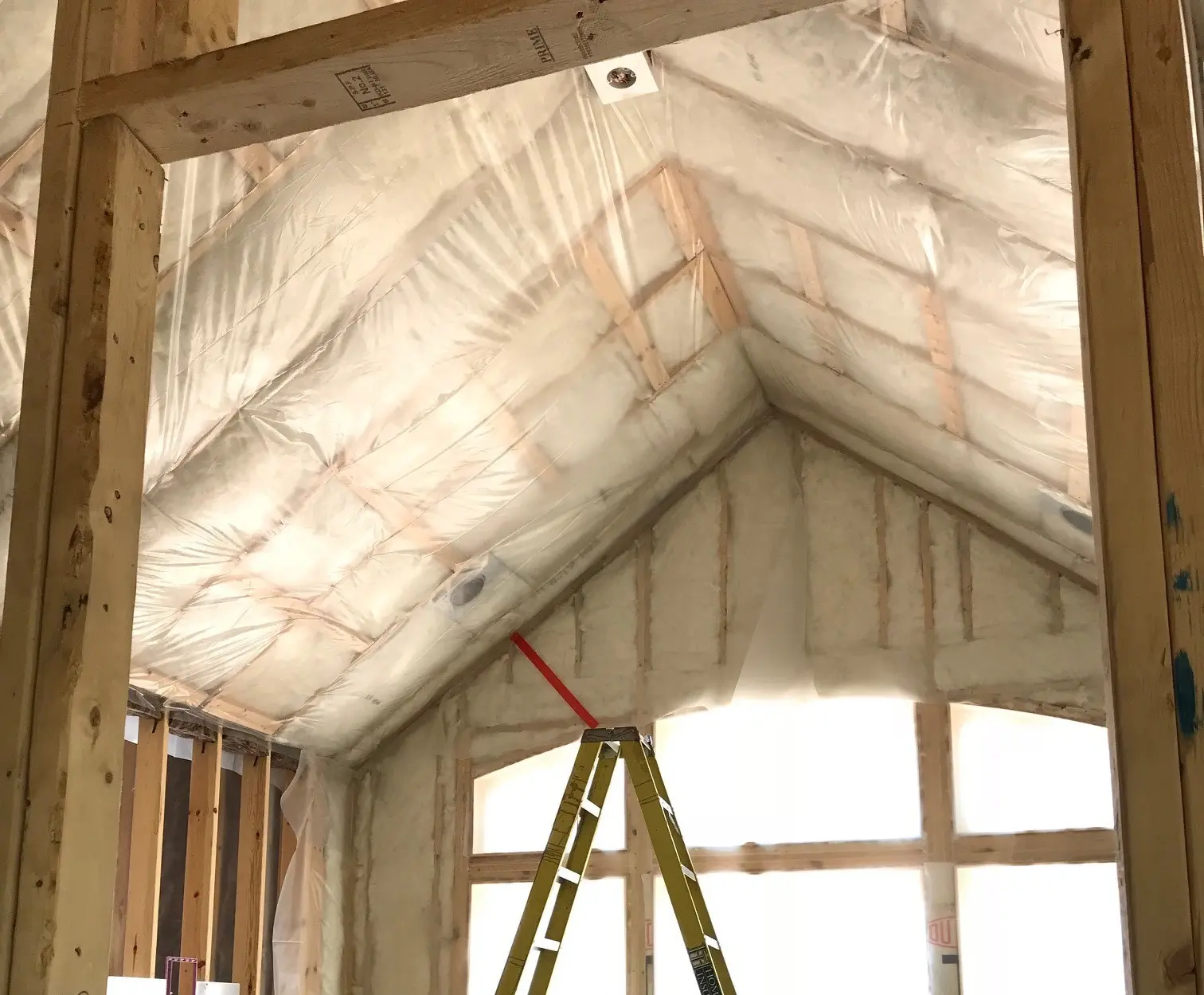
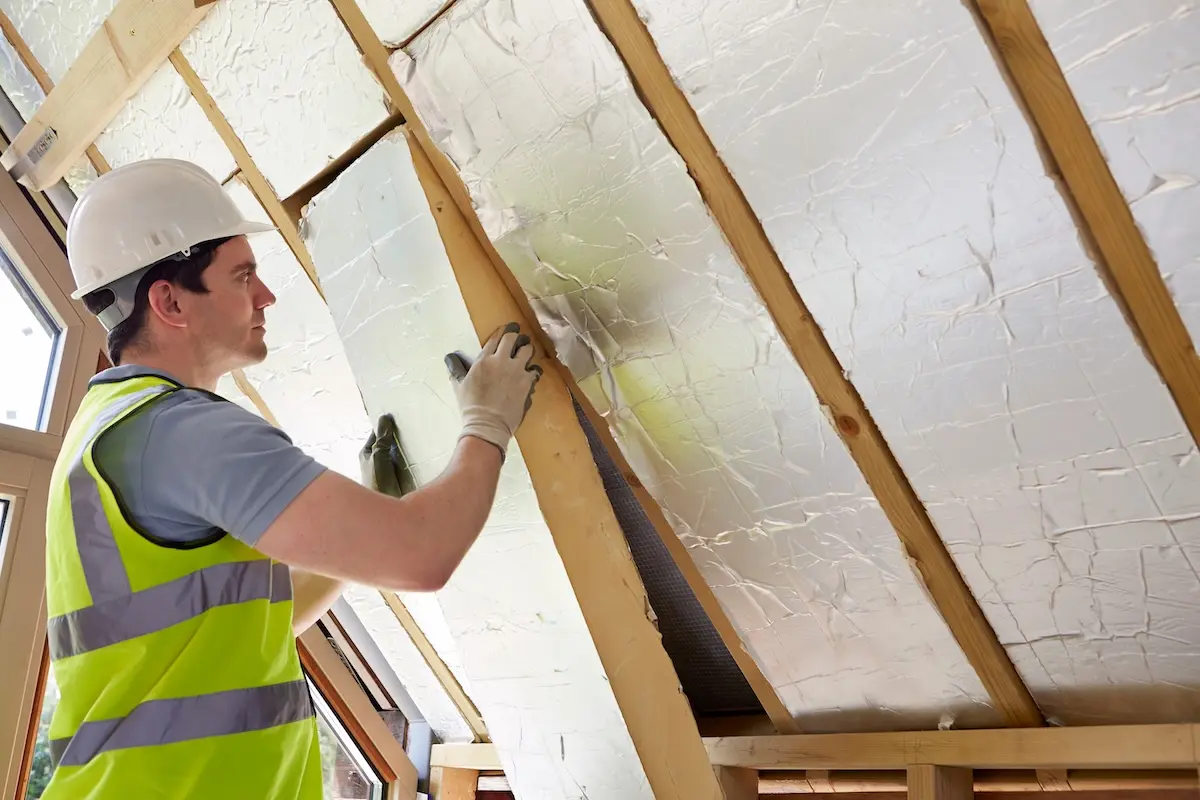
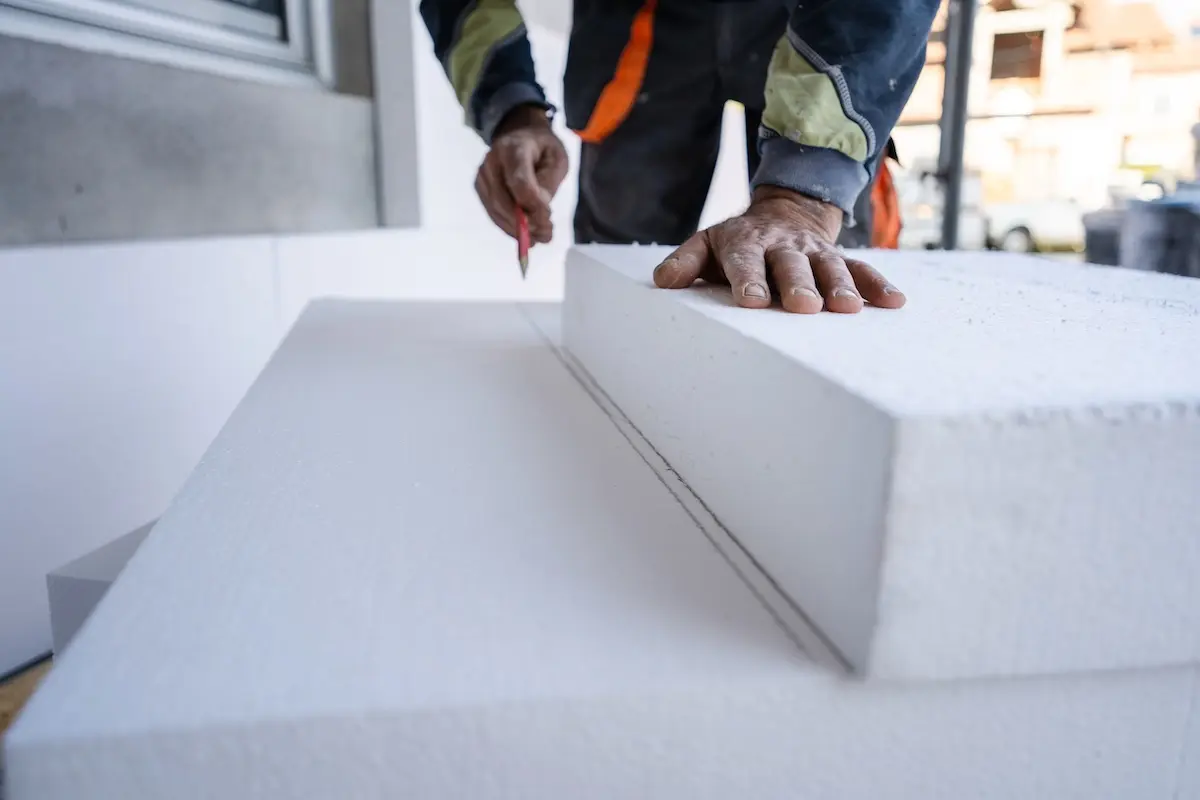
Foam insulation comes in two main forms: spray foam, which is applied as a liquid that expands and hardens on contact, and rigid foam board, which comes in pre-cut panels. Both work by trapping air or gas in their cell structure to resist heat flow, but spray foam adds an air sealing function that rigid boards and other insulation types do not provide on their own.

What Are the Two Main Types of Foam Insulation?
Spray foam and rigid foam board serve different purposes and are rarely interchangeable. Understanding which type fits your situation is the first step before getting any estimates. Spray foam is mixed on-site and applied with a spray gun, expanding to fill cavities, gaps, and irregular shapes. It comes in open-cell and closed-cell versions. Rigid foam boards are manufactured panels, typically expanded polystyrene (EPS), extruded polystyrene (XPS), or polyisocyanurate (polyiso), and are cut to fit during installation. Each type has a distinct R-value per inch, moisture resistance profile, and price point, and choosing the right one for a given application makes a significant difference in both performance and cost.
- Open-cell spray foam: Softer, more affordable, R-3.5 to R-4 per inch; best for interior cavities and areas where moisture is not a concern.
- Closed-cell spray foam: Dense and rigid when cured, R-6 to R-7 per inch; the preferred choice for crawl spaces, rim joists, and any moisture-exposed surface.
- Rigid foam boards (EPS/XPS/polyiso): Pre-cut panels ranging from R-3.6 to R-6.5 per inch depending on type; used for continuous exterior insulation, basement walls, and under-slab applications.
- Key difference from other insulation: Spray foam is the only insulation material that simultaneously insulates and creates an air barrier, which is why its installed performance often exceeds its R-value rating alone.
Why Does Air Sealing Matter So Much With Foam Insulation?
Air leakage is one of the biggest sources of energy loss in a home, and it is a problem that R-value alone does not fix. The U.S. Department of Energy estimates that air infiltration accounts for 30% or more of a home’s heating and cooling costs, which means a home with excellent R-values but poor air sealing still loses a significant share of its energy through cracks, gaps, and penetrations. Spray foam addresses both issues at once, which is the primary reason it tends to outperform other insulation materials in real-world energy savings despite costing more upfront.
- Where air leaks happen: Around recessed lights, plumbing and electrical penetrations, attic hatches, rim joists, and the gap between the foundation and framing.
- Why batts and blown-in miss it: Fiberglass batts and loose-fill insulation add R-value but do not seal the air pathways around them; a separate air sealing step is required to get comparable performance.
- Spray foam advantage: One application handles both the thermal resistance and the air barrier, reducing installation time and eliminating the gap between rated and actual performance.
- Blower door test results: Homes insulated with spray foam consistently show lower air leakage rates on diagnostic tests than homes insulated with batts or blown-in without dedicated air sealing.
7 Pros of Foam Insulation
These are the advantages that make foam insulation worth the higher price in the right applications. Not all of them apply equally to every type of foam, so the notes below clarify which benefits belong to spray foam, rigid board, or both.
1. It Delivers the Highest R-Value Per Inch Available
No other common insulation material matches closed-cell spray foam for thermal resistance in a thin application. This matters most when space is limited and you need to hit a high R-value target without adding significant depth to the assembly. Closed-cell spray foam achieves R-6 to R-7 per inch, meaning just 3 inches of foam delivers R-18 to R-21 in a rim joist or crawl space wall where there may not be room for anything thicker. Polyisocyanurate rigid board reaches R-6 to R-6.5 per inch and is the highest-performing rigid option. In contrast, fiberglass batts top out at R-4.3 per inch, and blown-in products land between R-2.2 and R-3.8 per inch. For homeowners in Appleton and surrounding areas trying to meet Wisconsin’s recommended attic R-value of R-49 to R-60, or hit code minimums on a basement wall, foam gives you the most performance per inch of thickness.
- Closed-cell spray foam: R-6 to R-7 per inch, the highest of any standard residential insulation material.
- Polyiso rigid board: R-6 to R-6.5 per inch; commonly used as continuous exterior insulation where framing depth is fixed.
- Practical example: A 2-inch application of closed-cell spray foam on a rim joist achieves R-12 to R-14, meeting Wisconsin’s minimum requirement for that assembly in a space too tight for anything else.
- Thin-space applications: Roof assemblies, crawl space walls, and rim joists all benefit from foam’s high R-value per inch when physical depth is a constraint.
2. It Seals Air Leaks While It Insulates
Spray foam is the only insulation material that creates an air barrier as part of the installation, eliminating a separate step that other insulation systems require. This is one of the most practical advantages for homeowners dealing with drafts, cold spots, or high heating bills that other improvements have not fully resolved. When spray foam expands, it fills every gap, crack, and irregular surface it contacts, bonding permanently to wood, concrete, and metal. The result is a continuous seal that stops conditioned air from escaping and cold outside air from entering.
- No separate caulking step: Unlike batts or blown-in, spray foam does not require a dedicated air sealing pass before or after installation to perform at full capacity.
- Gap filling in practice: Spray foam reaches around pipes, wires, and irregular framing that would leave voids with any cut-and-fit insulation product.
- Rim joist sealing: One of the best examples of foam’s dual function; a single closed-cell application seals and insulates one of the leakiest areas in any home.
- Long-term performance: Because the air barrier is part of the insulation itself, it does not degrade or separate over time the way tape, caulk, or separate membrane products can.
3. It Controls Moisture in Problem Areas
Closed-cell spray foam acts as a vapor retarder, slowing the movement of moisture through walls and floor assemblies. In Wisconsin winters, the temperature difference between inside and outside is large enough that moisture in warm interior air can condense on cold surfaces inside the wall, leading to mold, rot, and structural damage over time. Applying closed-cell foam to the cold side of an assembly keeps that surface warm enough to prevent condensation from forming. This is particularly valuable in crawl spaces, basement walls, and rim joists, which are the three areas where moisture problems most commonly develop in Appleton and surrounding areas homes. No fiberglass batt or blown-in product provides this moisture control function on its own.
- Vapor retarder function: Closed-cell spray foam at 2 inches or more qualifies as a Class II vapor retarder per building code, eliminating the need for a separate poly barrier in most applications.
- Crawl space protection: Foam on crawl space walls and rim joists keeps wood framing dry, dramatically reducing the risk of mold and rot in the most vulnerable part of many older homes.
- Basement walls: Closed-cell foam applied directly to a concrete basement wall prevents condensation on the cold concrete surface while adding R-value to an otherwise uninsulated assembly.
- Mold prevention: Drier framing means fewer conditions for mold growth, which protects both the structure and the indoor air quality of the living spaces above.
4. It Does Not Settle, Compress, or Degrade Over Time
Spray foam cures into a permanent solid that holds its shape, thickness, and R-value indefinitely. This is a meaningful advantage over blown-in cellulose and fiberglass batts, both of which can lose effective depth through settling, compression, or moisture absorption over the years. A homeowner who installs spray foam in their attic or crawl space gets the same performance ten or twenty years later that they got on installation day. This is especially relevant in attic floors, where blown-in products are subject to air movement and occasional foot traffic, and in crawl spaces, where moisture and pests can compromise other insulation materials over time.
- No settling: Spray foam maintains its full installed thickness from day one through the life of the structure, unlike loose-fill products that lose 10 to 15% of their depth within the first few years.
- No compression: Unlike fiberglass batts crammed into tight spaces, foam does not lose R-value from being squeezed into a cavity.
- Pest resistance: Spray foam does not provide food or nesting material for rodents, which commonly burrow into and displace fiberglass and cellulose in attics and crawl spaces.
- Practical lifespan: Properly installed spray foam is expected to last 80 to 100 years, making it the closest thing to a permanent insulation solution available to homeowners today.
5. It Reduces Outside Noise
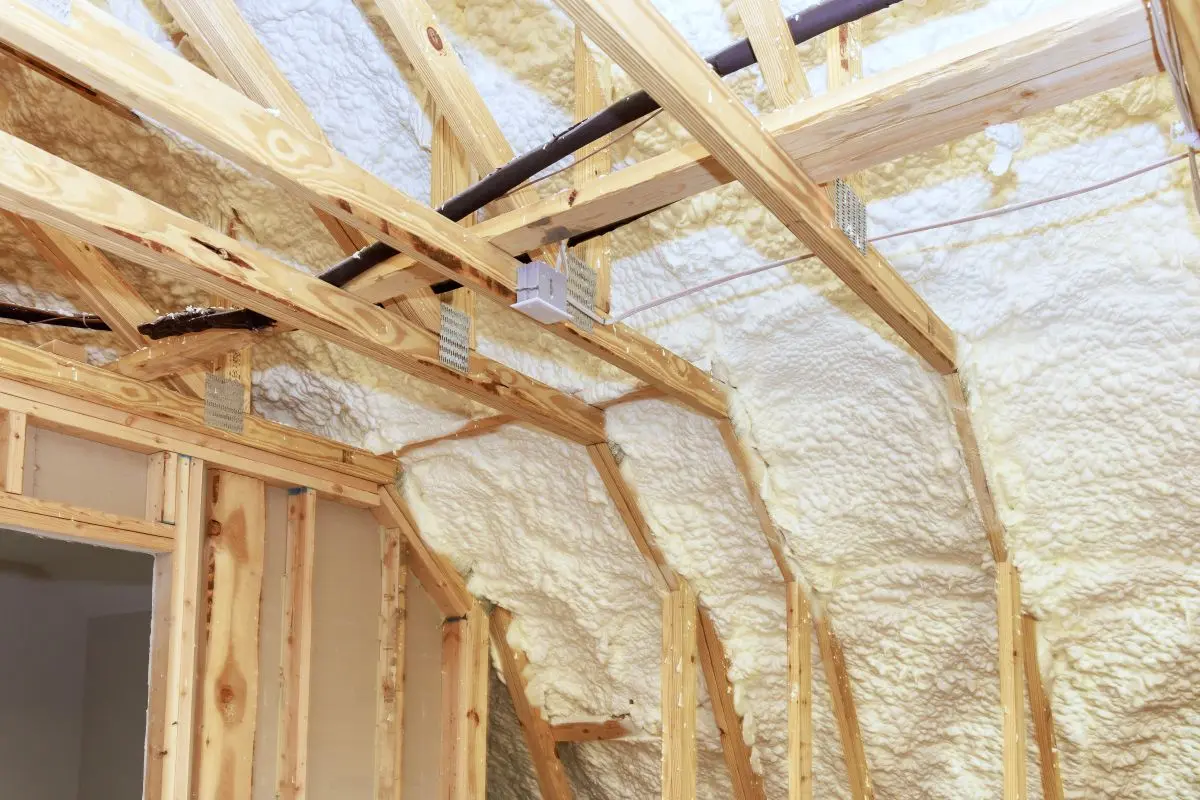
Open-cell spray foam has a soft, spongy texture that absorbs airborne sound rather than reflecting it, making it an effective acoustic insulation material in addition to a thermal one. Homeowners who have foam installed in exterior walls or between floors routinely notice a reduction in outside traffic noise, wind noise, and sound transmission between rooms as a side effect of the insulation upgrade, with no extra cost or added material. Closed-cell foam also reduces sound transmission, though its denser structure makes it a better reflector than absorber; it works best for sound when paired with open-cell in a hybrid assembly. For Appleton and surrounding areas homeowners working near busy roads, attached to neighboring units, or simply wanting a quieter home office, open-cell foam in exterior walls delivers meaningful results.
- Open-cell STC performance: Open-cell foam in a standard 2×4 wall achieves a sound transmission class (STC) rating of 37 to 39, versus 32 to 36 for standard fiberglass batts.
- Best sound applications: Exterior walls, floors above living spaces, home offices, master bedrooms, and walls adjacent to garages or utility rooms.
- No additional cost: The acoustic benefit comes at no extra charge because it is a natural property of the material, not an add-on product or treatment.
- Hybrid approach: Using open-cell in interior and exterior walls for sound while applying closed-cell in crawl spaces and rim joists for moisture control gets the right material in the right place throughout the home.
6. It Can Strengthen the Structure It Is Applied To
Closed-cell spray foam bonds rigidly to the surfaces it contacts and adds measurable structural stiffness to wall, floor, and roof assemblies. Research conducted by the Spray Polyurethane Foam Alliance has shown that closed-cell foam applied to roof decking increases resistance to wind uplift, which is relevant for any Wisconsin home that sees severe spring or summer storms. For older homes with aging framing or minor movement at connections, the rigid bond of closed-cell foam can stabilize the assembly without requiring replacement of materials. This structural contribution does not replace proper framing, but it is a genuine secondary benefit that no other insulation material provides.
- Racking resistance: Closed-cell foam increases wall panel stiffness, helping the structure resist lateral forces from wind loads.
- Roof deck reinforcement: Foam bonded to the underside of roof sheathing adds uplift resistance, a meaningful benefit in high-wind events.
- Older home benefit: Minor gaps and movement at framing connections are filled and stabilized by foam, reducing drafts and adding rigidity without demolition.
- Unique to closed-cell: Open-cell foam and rigid boards do not provide the same degree of structural reinforcement because they lack the same bond strength and density.
7. It Can Improve Resale Value and Buyer Appeal
Energy performance is a growing factor in home purchase decisions, and a home with documented foam insulation upgrades in the attic, crawl space, and rim joists has a measurable advantage on the market. Low utility bills are a tangible selling point, and buyers who have done their research recognize the difference between a home with proper foam air sealing and one with aging fiberglass batts and no dedicated air barrier. A professional blower door test result showing a tight building is a documented asset. For homeowners in Appleton and surrounding areas who plan to sell within the next decade, foam insulation upgrades tend to pay in two ways: lower monthly costs while you live there, and a stronger position when it is time to sell.
- Energy audit documentation: A post-installation blower door test showing low air leakage is a concrete, verifiable asset that home inspectors and buyers notice.
- Utility bill history: Consistently low heating and cooling bills are among the most persuasive selling points for buyers comparing homes of similar size.
- Market awareness: Buyers in 2026 increasingly ask about insulation type and energy performance during the purchase process, especially in Wisconsin where heating costs are a major annual expense.
- Combined upgrade value: Foam insulation paired with a newer furnace or water heater creates a complete energy efficiency story that supports a higher asking price.
The Real Cons of Foam Insulation
Every contractor will tell you the pros. Here are the honest drawbacks worth understanding before you commit.
What Are the Downsides of Foam Insulation?
Foam insulation has genuine limitations, and knowing them upfront prevents surprises after the invoice is paid. The most significant cons are cost, the requirement for professional installation, and a few specific situations where foam is simply not the right tool for the job. Spray foam costs two to five times more per square foot than fiberglass batts or blown-in cellulose depending on the type and application. For homeowners on a tight budget who need to insulate a large attic floor, blown-in may deliver better value because the air sealing can be done separately at a lower combined cost. Foam also requires professional installation for any meaningful area of coverage; DIY kits exist for small gap-filling tasks, but improper mixing or application can result in foam that fails to cure, shrinks away from framing, or off-gasses for longer than normal.
- Higher upfront cost: Closed-cell spray foam runs $1.00 to $2.00 per board foot installed, compared to $0.40 to $1.00 for blown-in fiberglass or cellulose.
- Professional installation required: Spray foam requires calibrated equipment and trained applicators; improper installation is difficult to detect until problems appear.
- Not ideal for large open attic floors: When covering a large horizontal attic floor, blown-in cellulose or fiberglass is typically more cost-effective and performs nearly as well when paired with proper air sealing.
- Curing odor: There is a chemical odor during and immediately after installation that requires vacating the treated area for roughly 24 hours while the foam fully cures.
- Difficult to remove: Spray foam bonds permanently to surfaces, making it hard to remove cleanly if future access to wiring, plumbing, or structural members is needed.
- UV sensitivity: Exposed spray foam degrades when hit by sunlight over time and must be covered with paint, drywall, or another protective material in any visible application.
Where Does Foam Insulation Work Best in a Wisconsin Home?
Knowing the strongest applications for foam saves money and ensures you get the most out of the investment. These are the areas where foam tends to consistently outperform the alternatives.
What Are the Best Places to Use Spray Foam in a Home?
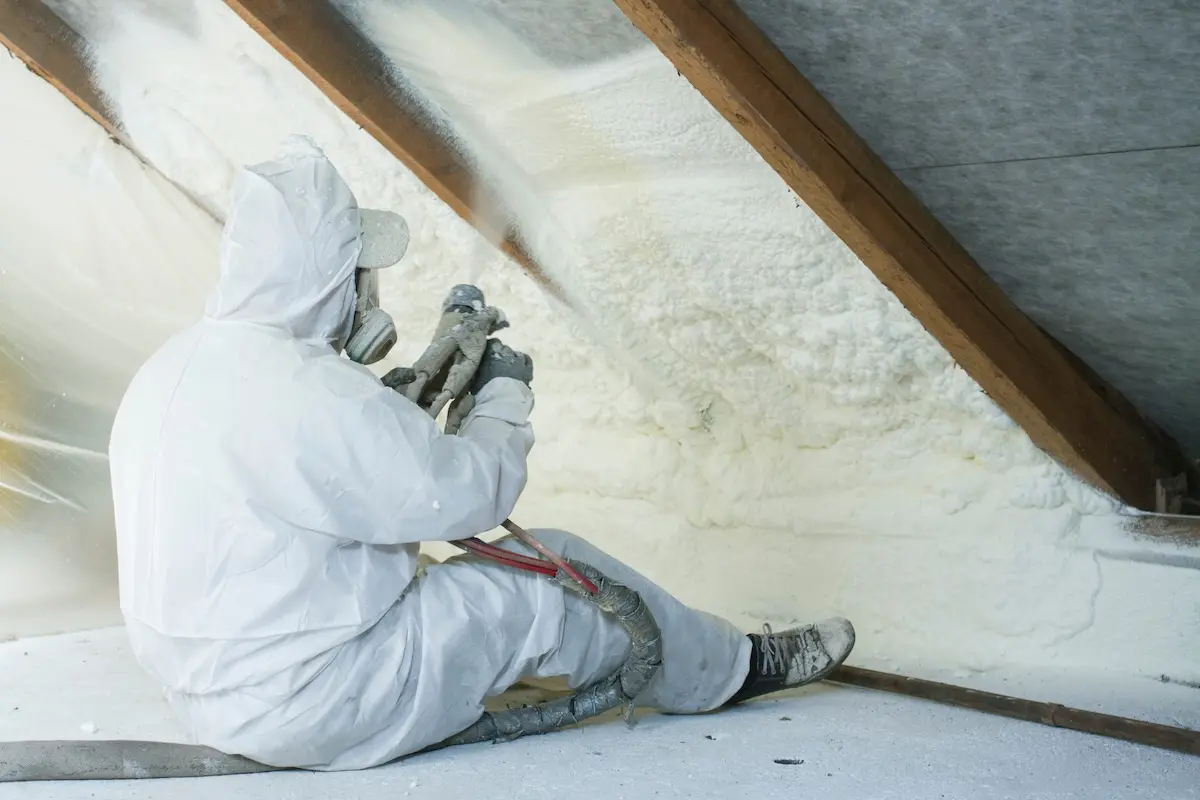
Spray foam delivers its strongest results in areas that combine tight geometry, moisture exposure, and high air leakage potential. These are the spots where the dual insulation-and-air-sealing function provides the greatest advantage over materials that only do one job at a time. Rim joists and crawl spaces are the two highest-value applications for most Appleton and surrounding areas homes because they are consistently under-treated, highly exposed to cold air and moisture, and difficult to insulate effectively with cut-and-fit materials. Attic rafter bays in conditioned attic conversions are another strong application for open-cell foam, which fills irregular rafter geometry more completely than any cut batt.
- Rim joists: The single best return-on-investment foam application in most Wisconsin homes; closed-cell at 2 to 3 inches seals and insulates one of the leakiest areas for $500 to $1,500.
- Crawl space walls and floor: Closed-cell foam on crawl space walls controls moisture, seals air infiltration, and insulates in one application, transforming a problem space into a dry, conditioned area.
- Conditioned attic rafter bays: Open-cell foam sprayed between and over rafters creates a fully conditioned attic that keeps HVAC equipment and ductwork inside the thermal boundary of the home.
- Basement walls: Closed-cell applied directly to concrete eliminates condensation on the wall surface and adds R-value without requiring a stud wall framing assembly first.
Frequently Asked Questions About Foam Insulation
How much does foam insulation cost in 2026?
Open-cell spray foam runs $0.44 to $0.65 per board foot installed. Closed-cell runs $1.00 to $2.00 per board foot. Rigid foam board costs $0.25 to $1.00 per square foot per inch of thickness depending on type. A typical rim joist treatment runs $500 to $1,500; a full crawl space encapsulation runs $2,500 to $6,000.
Is foam insulation worth the higher cost?
In the right applications, yes. Rim joists, crawl spaces, and conditioned attics consistently deliver strong returns because foam’s air sealing function adds savings that R-value alone cannot account for. For large open attic floors where blown-in is feasible, the cost difference may not justify foam.
How long does spray foam insulation last?
Properly installed spray foam lasts 80 to 100 years without settling, compressing, or degrading. It is essentially a permanent installation and does not require the periodic top-offs that blown-in products sometimes need.
Can foam insulation be installed in any season?
Spray foam requires surface and ambient temperatures above 50 degrees Fahrenheit for proper curing. In Wisconsin, that means late spring through early fall is ideal for crawl space and exterior applications. Indoor applications like rim joists and basement walls can be done year-round.
Does foam insulation off-gas after installation?
There is a chemical odor during application and for roughly 24 hours after while the foam cures. Once fully cured, properly installed spray foam is inert and odorless. Homeowners and pets should avoid the treated area during that curing window.
Is there a tax credit for foam insulation?
Yes. Under the Inflation Reduction Act, the Energy Efficient Home Improvement Credit covers 30% of qualified insulation material costs up to $1,200 per year through 2032. Wisconsin’s Focus on Energy program also offers utility rebates for qualifying air sealing and insulation upgrades. Consult a tax professional to confirm your specific eligibility.
Talk to Hometown Insulation About Foam Insulation
Foam insulation is one of the most powerful upgrades available to Wisconsin homeowners, but getting the most out of it means using the right type in the right place. At Hometown Insulation, we help homeowners in Appleton and surrounding areas figure out exactly where foam delivers the best return, what it will realistically cost, and whether it makes more sense than a less expensive alternative in any given area of the home. We give you straight answers before you spend a dollar. Reach out today to schedule a consultation and get a clear picture of what foam insulation can do for your home in 2026.