Home Insulation (5 Types, Costs & Energy Savings 2026)
Choosing the right home insulation is one of the most impactful upgrades a homeowner can make, and in De Pere and surrounding areas, where winters are long and heating bills can climb fast, getting it right matters even more. This guide breaks down the five most common insulation types, what they cost in 2026, and exactly how much energy each one can save you.
Here is a quick look at what you will learn:
- Types of insulation: A clear breakdown of the five main options, from spray foam to blown-in cellulose, so you can compare performance and price side by side.
- Real cost ranges: Honest 2026 cost figures per square foot and per whole-home install, so you can budget accurately before calling a contractor.
- Energy savings potential: Specific data on how proper insulation reduces heating and cooling costs, including what to realistically expect on your utility bills.
Why Home Insulation Is the Smartest Investment You Can Make in 2026
Upgrading your home insulation delivers returns that few other renovations can match. Energy costs have continued to rise across Wisconsin, making thermal efficiency a financial priority, not just a comfort upgrade.
How Much Can Home Insulation Actually Save You?
Properly installed insulation can reduce your monthly heating and cooling costs by a measurable, predictable amount. The U.S. Department of Energy and EPA have studied this extensively, and the numbers are compelling for any homeowner on the fence.
According to the U.S. Environmental Protection Agency, homeowners can save an average of 15% on heating and cooling costs by air sealing their homes and adding insulation in attics, floors over crawl spaces, and accessible basement rim joists.
- Annual savings range: Most Wisconsin homeowners save between $200 and $600 per year after a full insulation upgrade, depending on home size and previous insulation levels.
- Payback period: Most residential insulation installs pay for themselves within 3 to 7 years through reduced utility bills alone.
- Comfort gains: Beyond dollars, properly insulated homes eliminate cold spots, drafts near windows and doors, and uneven room temperatures that plague under-insulated homes.
What Happens When a Home Is Under-Insulated?
Under-insulation is not a rare problem; it is the norm across the United States. A 2025 report by the Insulation Institute found that approximately 89% of U.S. homes are under-insulated relative to modern energy code standards, meaning the majority of homeowners are leaving money on the table every single month.
- Heat loss through the attic: Up to 25% of a home’s heat escapes through an inadequately insulated attic, making it the highest-priority zone for most Wisconsin homeowners.
- Moisture and ice dam risk: Insufficient insulation in cold climates like De Pere and surrounding areas accelerates moisture buildup and increases the risk of costly ice dams along roof edges.
- HVAC strain: When insulation is thin or degraded, your furnace and air conditioner run longer cycles, shortening equipment life and increasing repair frequency.
5 Types of Home Insulation: Performance, Cost & Best Uses
Selecting the right insulation type depends on where it is being installed, your budget, and your performance goals. Each of the five materials below offers distinct advantages, and understanding those differences helps you make a confident decision.
1. Spray Foam Insulation: The Highest Performance Option
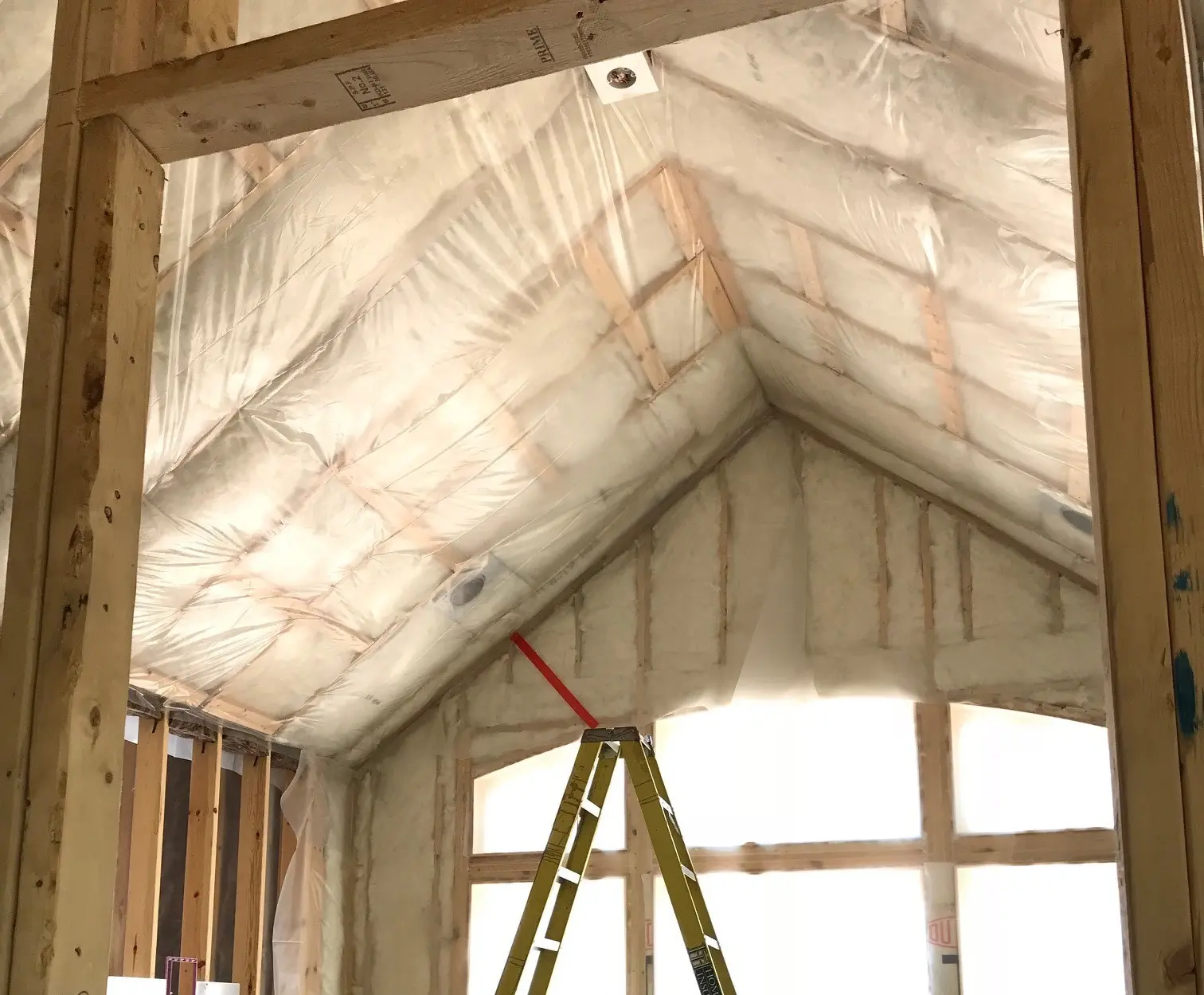
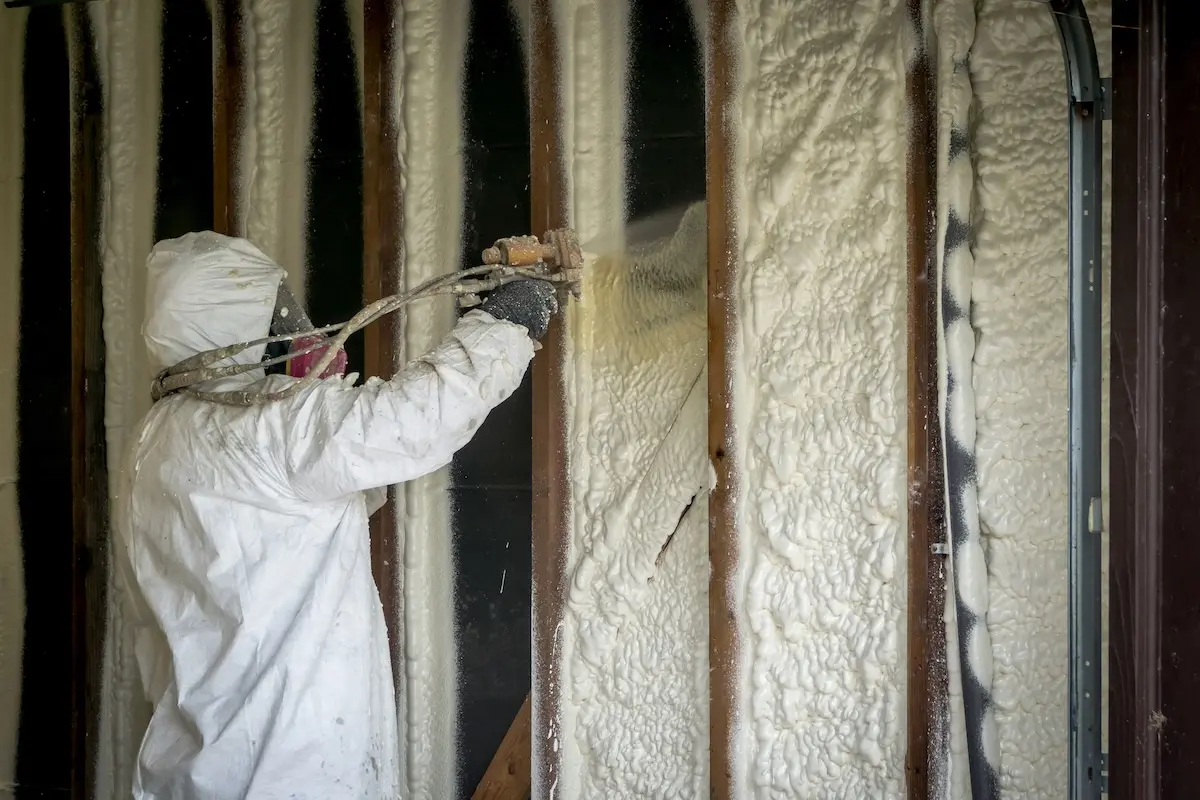
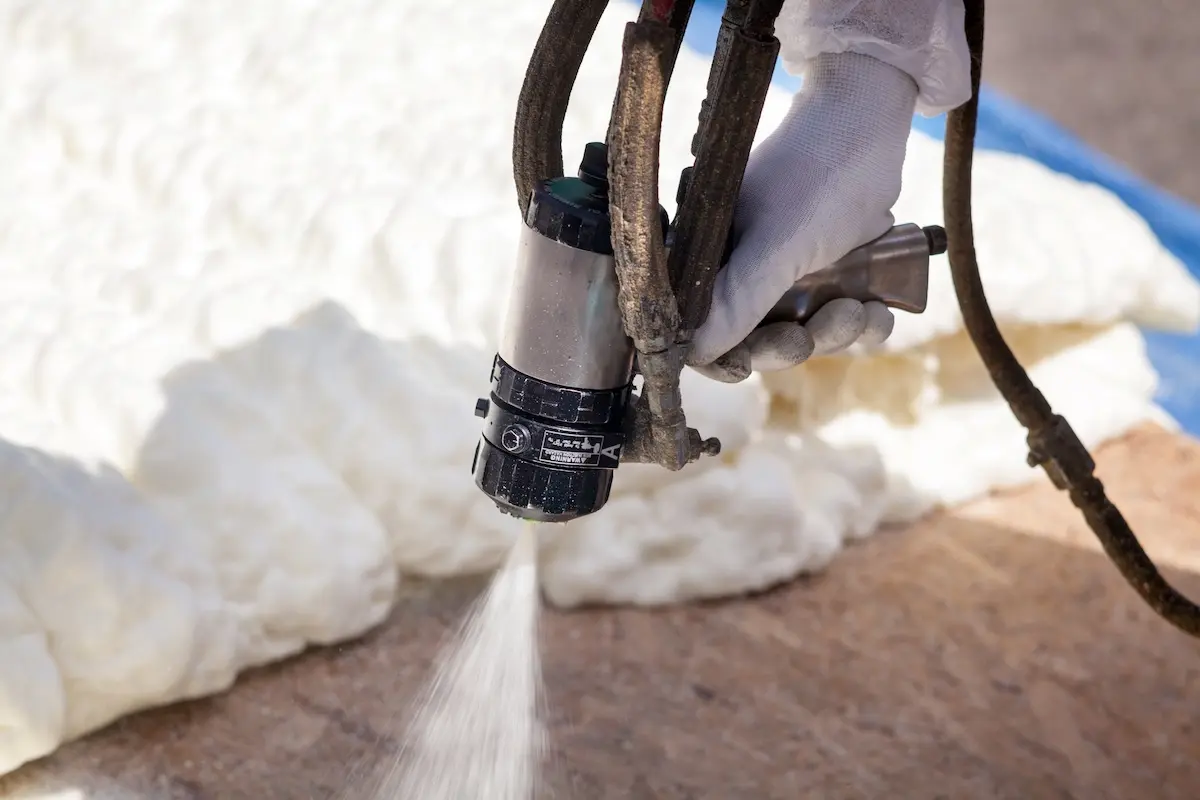
Spray foam insulation is the gold standard for air sealing and thermal resistance, delivering both insulation and air barrier performance in a single application. It is especially popular in De Pere and surrounding areas for attics, rim joists, and crawl spaces where air infiltration is a major source of heat loss. Spray foam comes in two forms: open-cell, which is softer and more affordable, and closed-cell, which is denser, has a higher R-value, and acts as a vapor barrier. Closed-cell spray foam achieves R-6 to R-7 per inch, while open-cell reaches R-3.5 to R-4 per inch. Professional installation is required for both types, and the material cost runs higher than other options.
- Open-cell spray foam cost: Typically $0.44 to $0.65 per board foot installed, making it one of the more budget-friendly spray options.
- Closed-cell spray foam cost: Ranges from $1.00 to $2.00 per board foot installed, reflecting its superior thermal and moisture resistance properties.
- Best applications: Attics, rim joists, basement walls, crawl spaces, and any area where both insulation and air sealing are needed simultaneously.
- Lifespan: Closed-cell spray foam can last the lifetime of the structure when properly installed and protected from UV exposure.
2. Blown-In (Loose-Fill) Insulation: The Attic Workhorse
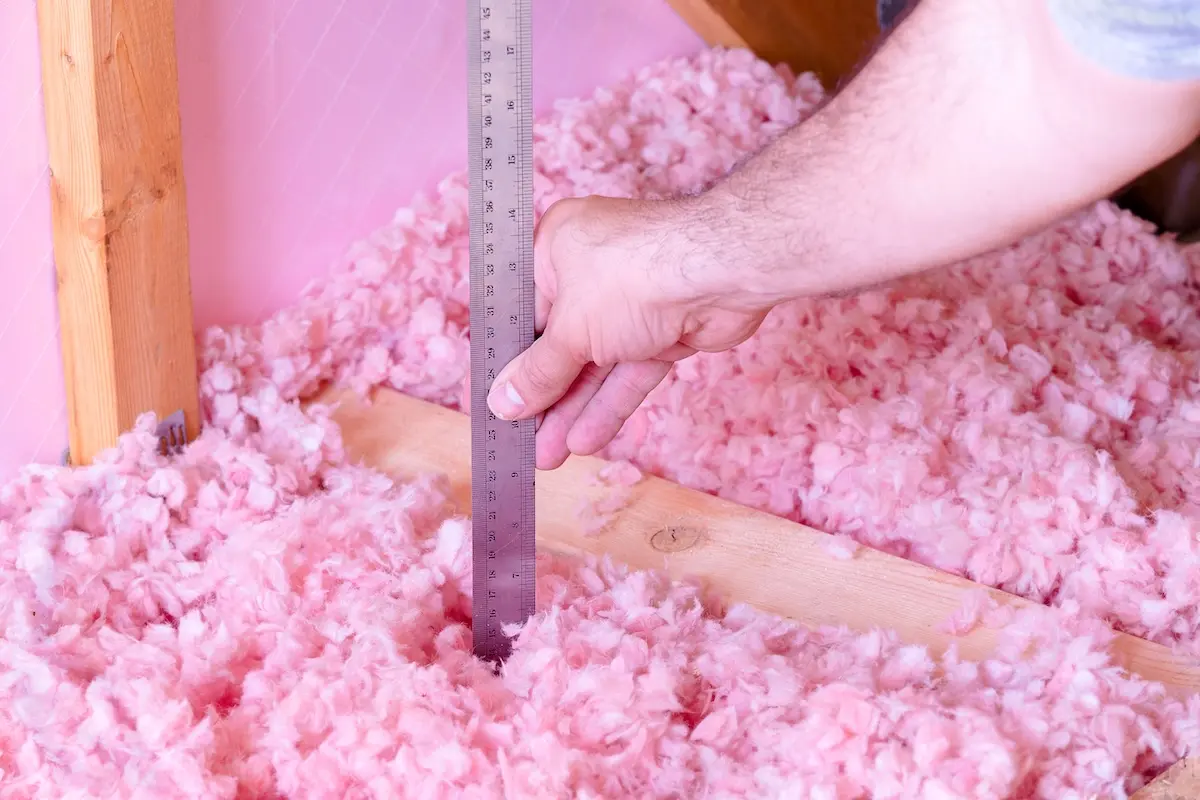
Blown-in insulation, also called loose-fill, is one of the most cost-effective ways to bring attic insulation up to code in existing homes. It is installed by blowing loose fibers into the space using a hose and blowing machine, making it ideal for covering large areas quickly and filling irregular spaces around joists and framing without gaps. Fiberglass and cellulose are the two most common materials used in blown-in applications. Cellulose is made from recycled paper and is treated for fire and pest resistance, while fiberglass blown-in is lighter and resistant to moisture absorption. In Wisconsin, the DOE recommends attic insulation levels of R-49 to R-60 for climate zones 6 and 7, which often means adding 14 to 20 inches of blown-in material on top of existing insulation.
- Fiberglass blown-in cost: Between $0.40 and $1.00 per square foot installed, making full attic coverage affordable for most homeowners.
- Cellulose blown-in cost: Typically $0.50 to $1.25 per square foot installed, slightly higher but with better air infiltration resistance.
- R-value per inch: Fiberglass achieves R-2.2 to R-2.7 per inch; cellulose achieves R-3.2 to R-3.8 per inch.
- Best applications: Attic floors, existing wall cavities via drill-and-fill, and floors above unconditioned spaces like garages.
3. Fiberglass Batt Insulation: The Most Familiar Option
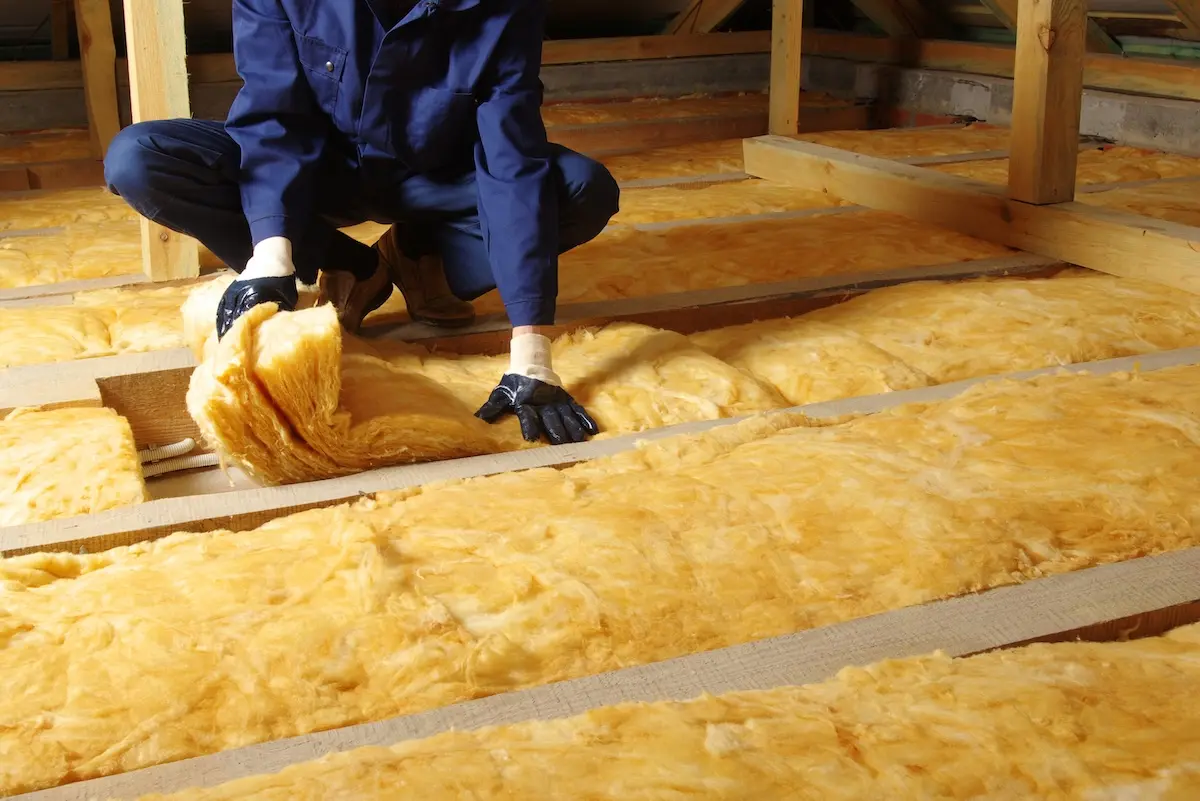
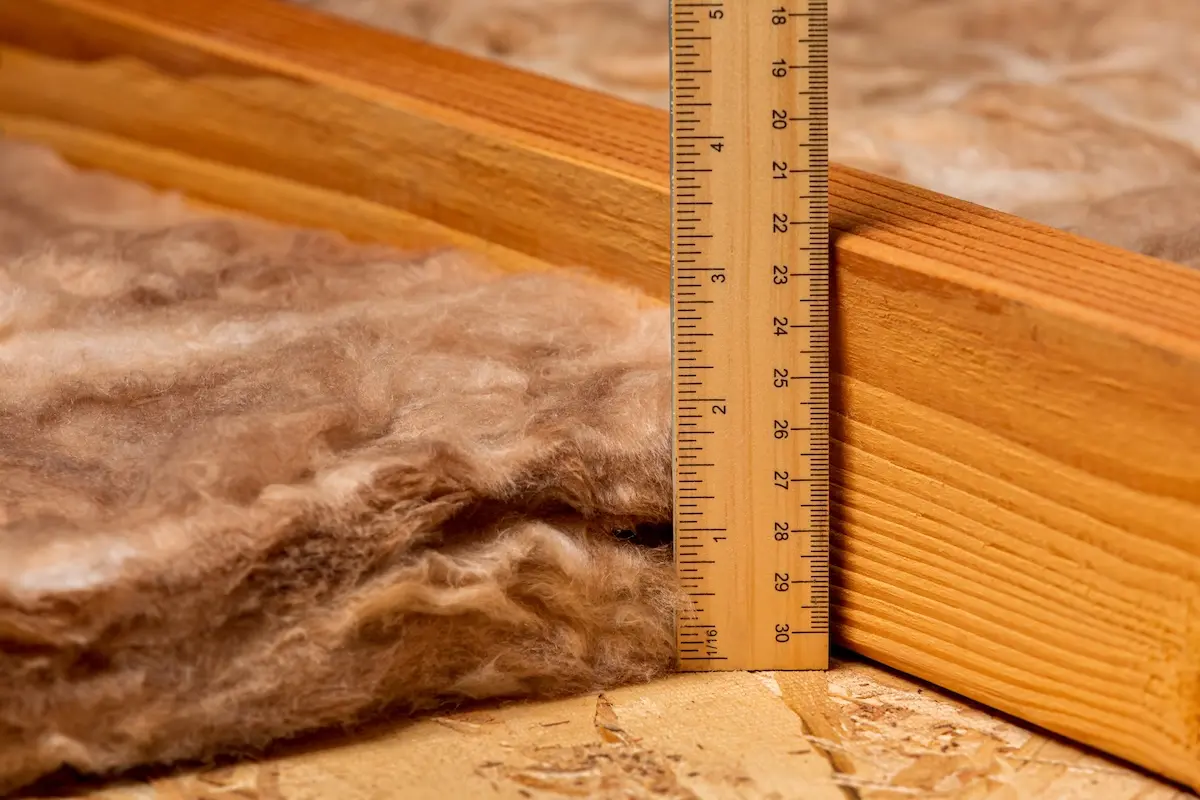
Fiberglass batt insulation is the pink or yellow roll-and-cut material most homeowners recognize from home improvement stores, and it remains a reliable, widely used solution for new construction and accessible open-framing applications. Batts are pre-cut to fit standard 16-inch and 24-inch stud spacing, which makes them straightforward to install in walls, floors, and ceilings during a remodel or new build. The key to batt insulation performance is proper installation; gaps, compression, and voids significantly reduce effective R-value. When installed correctly, fiberglass batts achieve R-3.1 to R-4.3 per inch depending on density and facing. Kraft-faced batts include a vapor retarder on one side, which is recommended on the warm-in-winter side of exterior walls in Wisconsin.
- Fiberglass batt cost: Typically $0.30 to $1.50 per square foot installed, depending on thickness and R-value needed.
- R-value options: Standard batts range from R-11 (3.5 inches) for interior walls to R-38 (10 to 12 inches) for attic floors.
- Best applications: Open wall cavities during construction or remodel, attic floors, floors over unconditioned garages, and basement ceiling assemblies.
- Common mistake: Compression reduces R-value significantly; a 3.5-inch R-13 batt stuffed into a 2×4 cavity loses 20 to 40% of its rated performance.
4. Rigid Foam Board Insulation: Continuous Coverage Without Thermal Bridging
Rigid foam board insulation solves a problem that batt insulation cannot: thermal bridging through studs and framing. Because wood conducts heat, a wall insulated only between studs loses a meaningful amount of its rated R-value through the framing itself. Rigid foam boards are installed over the exterior or interior face of wall assemblies, creating a continuous thermal break across the entire surface. Three main types are available: expanded polystyrene (EPS) at R-3.6 to R-4 per inch, extruded polystyrene (XPS) at R-5 per inch, and polyisocyanurate (polyiso) at R-6 to R-6.5 per inch. In De Pere and surrounding areas, rigid foam is commonly used on basement walls, as exterior wall sheathing, and under new roofing assemblies.
- EPS board cost: Ranges from $0.25 to $0.50 per square foot per inch of thickness, making it the most affordable rigid option.
- XPS board cost: Typically $0.30 to $0.65 per square foot per inch, offering better moisture resistance than EPS.
- Polyiso board cost: Around $0.50 to $1.00 per square foot per inch, with the highest R-value per inch of any rigid foam type.
- Best applications: Basement walls, crawl space walls, exterior continuous insulation on walls, under roof decking, and over existing wall sheathing in deep energy retrofits.
5. Mineral Wool (Rockwool) Insulation: The Fire-Resistant Premium Option
Mineral wool, sold under brand names like Rockwool and Thermafiber, is made from spun basalt rock or slag fiber and offers a combination of thermal resistance, fire resistance, and sound dampening that fiberglass alone cannot match. It is non-combustible, does not absorb moisture, and retains its shape and R-value over time without settling. Mineral wool batts achieve R-3.0 to R-4.2 per inch and are available in board form for continuous exterior applications. The material is more expensive than standard fiberglass but is increasingly popular in Wisconsin for exterior walls, party walls between attached units, and any application where fire or acoustic performance is a priority. Contractors and building scientists frequently recommend mineral wool for rim joists and band joists due to its ability to be friction-fit without an adhesive.
- Mineral wool batt cost: Typically $0.60 to $1.80 per square foot installed, roughly 30 to 50% more than comparable fiberglass batts.
- Fire resistance: Mineral wool does not melt or burn at temperatures below 1,800 degrees Fahrenheit, making it a preferred choice for fire-rated assemblies.
- Sound control: The dense fiber matrix absorbs airborne sound significantly better than fiberglass, achieving STC ratings of 45 to 52 in typical wall assemblies.
- Best applications: Exterior walls, interior party walls, home theaters, attached garages, and any area where fire separation or sound control is a secondary goal.
What Does Home Insulation Cost in 2026? A Room-by-Room Breakdown
Understanding insulation costs by area of the home helps homeowners prioritize where to invest first and set realistic expectations before requesting estimates. Costs vary based on insulation type, accessibility, current conditions, and labor rates in the De Pere and surrounding areas market.
How Much Does Attic Insulation Cost?
Attic insulation is the single highest-return insulation investment available to most homeowners, since heat rises and an under-insulated attic bleeds warmth all winter long. The attic is also one of the easiest areas to insulate, which keeps labor costs relatively low compared to wall or crawl space work.
- Blown-in attic insulation: Averages $1,500 to $3,500 for a typical 1,000 to 1,500 square foot attic, including air sealing before insulating.
- Spray foam rim joist (included in attic scope): Adding closed-cell spray foam to rim joists during an attic job typically adds $500 to $1,200 to the total.
- Air sealing before insulating: Always recommended before adding blown-in; skipping it reduces energy savings by as much as 40%.
- DOE recommended R-value for Wisconsin: R-49 to R-60, requiring approximately 16 to 20 inches of blown-in fiberglass or 14 to 17 inches of cellulose.
How Much Does Wall Insulation Cost?
Wall insulation in an existing home is more labor-intensive than attic work because access requires either opening walls from the interior, removing exterior siding, or drilling and blowing loose-fill into closed cavities. The method chosen depends heavily on the condition of existing finishes and the homeowner’s remodeling plans.
- Drill-and-fill blown-in walls: Typically $1.50 to $3.00 per square foot for exterior wall area, covering material and the patching of drill holes.
- Open-wall batt replacement during remodel: $0.75 to $2.00 per square foot when walls are already open, making remodeling an ideal time to upgrade.
- Exterior rigid foam addition: Adds $2.00 to $5.00 per square foot to an exterior re-cladding job but dramatically improves whole-wall R-value.
- Average whole-home wall insulation job: Between $3,000 and $8,000 for a 1,500 to 2,000 square foot home depending on method and material.
How Much Does Crawl Space and Basement Insulation Cost?
Crawl spaces and basements are frequently the most neglected areas of a home, yet they account for a significant share of heat loss and moisture-related problems in Wisconsin. Properly insulating and sealing these areas dramatically reduces both energy use and the risk of mold, wood rot, and pest intrusion.
- Crawl space encapsulation with spray foam: Ranges from $3,000 to $8,000 depending on size and condition, combining insulation and vapor control in one scope of work.
- Basement wall rigid foam or batt: Typically $1.50 to $3.50 per square foot installed, with spray foam on the higher end at $2.00 to $5.00 per square foot.
- Vapor barrier installation: An essential companion to crawl space insulation, adding $500 to $2,500 depending on crawl space square footage and accessibility.
- Energy savings from crawl space work: Homeowners in De Pere and surrounding areas frequently report 10 to 20% reductions in heating bills after sealing and insulating the crawl space.
How to Choose the Right Insulation for Your Wisconsin Home
Selecting the right insulation type is not a one-size-fits-all decision. The right answer depends on where you are insulating, how old your home is, what your budget allows, and what performance outcome matters most to you.
What R-Value Does My Home Need?
R-value is the measure of an insulation material’s resistance to heat flow, and higher values mean better performance. The U.S. Department of Energy divides the country into climate zones, and Wisconsin falls in zones 6 and 7, among the most demanding in the country for heating performance.
- Attic: R-49 to R-60 recommended for Wisconsin, with most existing homes sitting at R-11 to R-19 before an upgrade.
- Exterior walls: R-13 to R-21 in the stud cavity, with additional exterior rigid foam bringing totals to R-25 or higher in high-performance builds.
- Crawl space walls or floor: R-19 to R-30, with spray foam preferred for its combined insulating and air sealing performance.
- Basement walls: R-10 to R-15 continuous, typically achieved with 2 to 3 inches of rigid foam or closed-cell spray foam.
Should I Insulate My Attic or Walls First?
Prioritizing insulation upgrades wisely means understanding where your biggest losses are happening before spending money. For most Wisconsin homes, the attic is the clear first priority, followed by the crawl space or basement, and then walls.
- Attic first: The largest single source of heat loss in most homes, and the most cost-effective area to insulate due to easy access and lower labor intensity.
- Crawl space second: Sealing and insulating the crawl space addresses moisture, cold floors, and energy loss simultaneously, delivering strong comfort and efficiency returns.
- Walls third: Wall insulation typically costs more per square foot than attic work and is most economically done during a remodel when walls are already open.
- Energy audit recommended: A professional blower door test and thermal imaging scan pinpoints your specific loss areas and helps prioritize spending for maximum return.
Frequently Asked Questions About Home Insulation
How long does home insulation last?
Most insulation materials last 20 to 100 years depending on type. Fiberglass and mineral wool batts retain performance for 80 to 100 years when kept dry. Blown-in cellulose and fiberglass may settle slightly over decades but remain effective. Spray foam lasts the lifetime of the structure.
Can I install home insulation myself?
Blown-in and batt insulation can be DIY-installed in accessible attics, but spray foam requires professional equipment and training. Improperly installed insulation loses significant R-value from compression, gaps, and missed air sealing, so professional installation is strongly recommended for whole-home upgrades.
How do I know if my home needs more insulation?
Common signs include uneven room temperatures, high heating and cooling bills, cold floors in winter, ice dams on the roof, and drafts near outlets and switches on exterior walls. A professional energy audit with a blower door test provides a definitive, data-driven answer.
Is there a tax credit for insulation in 2026?
Under the Inflation Reduction Act, homeowners may claim a federal tax credit of up to 30% of insulation material costs, capped at $1,200 per year, through the Energy Efficient Home Improvement Credit. Consult a tax professional for eligibility details specific to your situation.
How long does insulation installation take?
Most attic insulation jobs are completed in one day. Full crawl space encapsulation typically takes one to two days. Whole-home wall insulation retrofits using drill-and-fill can take two to four days depending on home size and accessibility.
Does insulation help with sound as well as temperature?
Yes. Dense-pack cellulose, mineral wool, and closed-cell spray foam all provide meaningful sound attenuation in addition to thermal performance. Mineral wool in particular is widely used for its sound dampening properties in interior walls, home offices, and attached garages.
Get Expert Insulation Help From Hometown Insulation
Upgrading your home insulation is one of the few home improvements that pays you back every single month on your utility bills, and the right installation makes all the difference in how much you actually save. At Hometown Insulation, our team has the local knowledge to recommend the right material for your specific home, whether that means spray foam in the rim joists, blown-in cellulose in the attic, or rigid foam on your basement walls. We serve De Pere and surrounding areas with honest assessments, transparent pricing, and quality workmanship that holds up through Wisconsin winters for decades to come. Reach out to Hometown Insulation today to schedule your home insulation assessment and find out exactly how much you could be saving in 2026.