R Value Insulation (What The Numbers Really Mean)
Every package of insulation comes with a number printed on it, but few homeowners know what that number actually promises. Understanding R value insulation ratings helps you compare products, avoid paying for performance you will never get, and choose the right material for each part of your house. Whether you are dealing with cold floors, a drafty upstairs, or rising energy costs, learning how to read these ratings is the first step toward a warmer, more energy-efficient home. This guide breaks the numbers down in plain language.
Here is what this guide unpacks:
- What R-value measures and why it matters
- Four factors that change real-world performance
- Recommended R-values for Wisconsin homes
- How common insulation types compare per inch
- Quick answers to frequent homeowner questions
What an R-Value Actually Tells You (and Why It Pays Off)
R-value is a measure of thermal resistance, or an insulation’s ability to resist heat transfer. The higher the R-value, the better it keeps warmth inside in winter and limits heat gain during summer. Because every material is tested the same way, the rating gives you a reliable way to compare insulation performance across products that otherwise look nothing alike.
For homeowners in Appleton and surrounding areas, where heating season stretches for much of the year, that rating has a direct impact on comfort and cost. Here is why it deserves your attention:
- Long-term energy savings: Higher R-values mean your furnace works less to replace lost heat, which trims heating and cooling costs year after year.
- More consistent comfort: Proper thermal resistance reduces cold spots, drafty rooms, and big temperature differences between floors.
- Smarter spending: Knowing how much insulation each area needs keeps you from under-insulating or paying for more material than you need.
- Fewer winter problems: A well-insulated attic helps keep the roof deck cold, which reduces the risk of ice dams forming along your eaves.
In short, R-value turns a confusing product decision into a simple comparison. Once you understand what the number means, it becomes much easier to judge whether your current insulation is doing its job.
4 Factors That Change Your Insulation’s Real-World R-Value
The number on the label reflects ideal lab conditions, and the performance inside your walls can be quite different. Several factors influence how much of that rated thermal resistance your home actually receives. Here are the four that matter most.
1. Material Type and Density
Each insulation material resists heat at a different rate per inch. Closed-cell spray foam insulation and rigid foam insulation pack the most resistance into a thin layer, while loose-fill and batt products need more depth to reach the same total. Density also plays a role, since tightly packed fibers or cells trap heat more effectively.
- Closed-cell spray foam offers roughly R-6 to R-7 per inch
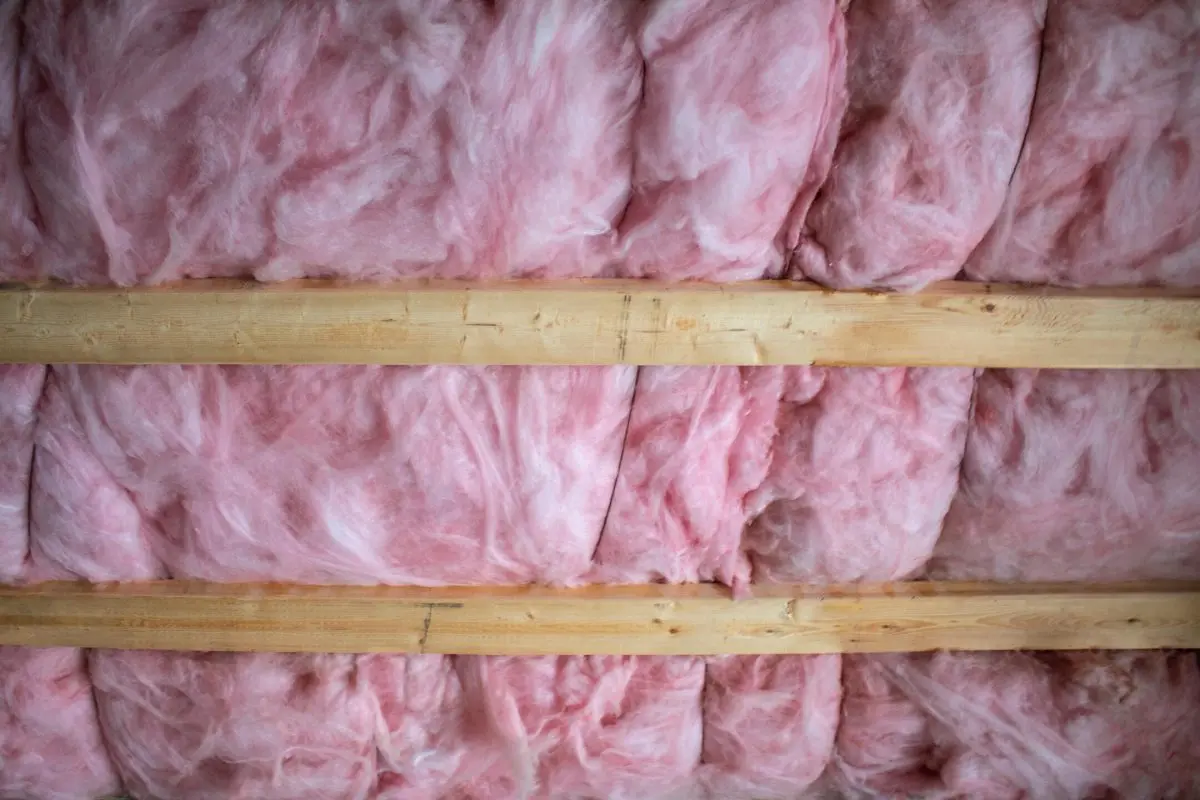
- Fiberglass insulation and mineral wool batts typically fall between R-3 and R-4 per inch
- Blown-in cellulose usually lands around R-3.2 to R-3.8 per inch
2. Thickness and Installation Quality
The thicker the insulation, the more resistance it provides, as long as the material stays the same. However, that only works if the insulation is installed correctly. Compressing a batt into a cavity that is too shallow lowers its effective R-value, and gaps or voids let heat slip right past.
- Squeezing an R-19 batt into a 2×4 wall cavity leaves you with roughly R-13 of real performance
- Loose-fill insulation can settle over time, reducing its depth and rating
- Gaps around wiring and outlets create weak spots in an otherwise good wall
3. Thermal Bridging Through Framing
Wood studs, joists, and rafters have a much lower R-value than the insulation between them. Heat travels through these framing members like a bridge, which means the overall R-value of a wall is lower than the number on the insulation itself. Continuous insulation, such as foam board insulation installed over the studs, helps break this path.
4. Air Leaks and Moisture
R-value measures resistance to conducted heat, not air movement. If warm air escapes through gaps around attic hatches, recessed lights, or plumbing penetrations, even thick insulation cannot keep up. Moisture problems are another concern, because wet fibrous insulation loses much of its ability to resist heat.
- Air sealing before insulating protects the R-value you pay for
- Proper ventilation keeps attic insulation dry and effective
- Fixing roof or plumbing leaks prevents long-term performance loss
These factors explain why two homes with the same rated insulation can feel completely different in January. Paying attention to installation, air sealing, and moisture control plays a significant role in overall performance, just like choosing a high number.
Recommended R-Values for Wisconsin Homes
The insulation needed depends heavily on your climate zone and where the insulation goes. Most of Wisconsin falls in climate zones 6 and 7, which are among the coldest in the continental United States, so colder regions like ours need far more than warmer areas, where moderate insulation may be enough.
Below are general targets based on ENERGY STAR guidance for cold climates. Your specific needs may vary depending on the age of your home and what is already installed:
- Attics: Uninsulated attics should reach R-49 to R-60. If you already have three to four inches of insulation, adding R-38 to R-49 on top is typically recommended.
- Exterior walls: Standard 2×4 walls usually hold R-13 to R-15, while 2×6 walls can reach R-19 to R-21. Adding exterior rigid insulation during re-siding improves the total.
- Floors over unheated spaces: Floors above crawl spaces or garages generally call for R-25 to R-30 to stop cold from creeping into living areas.
- Basement and crawl space walls: Insulating these walls to roughly R-15 to R-19 helps reduce heat loss through foundations, one of the most overlooked areas in older homes.
The attic is usually the best place to start, since heat rises and escapes fastest through the top of the house. Many older homes in Appleton and surrounding areas have far less attic insulation than today’s recommendations, which makes this one of the most cost-effective upgrades available. Wisconsin’s Focus on Energy program may also offer energy rebates for qualifying insulation projects, so it is worth checking before you start.
Comparing R-Value Per Inch Across Insulation Types
Knowing the total R-value you need is only half the picture. You also need to know how much depth each material requires to get there, especially in tight spaces like walls, cathedral ceilings, and rim joists.
| Insulation Type | Approx. R-Value Per Inch | Best Suited For |
| Blown-in fiberglass | R-2.2 to R-2.7 | Open attics |
| Blown-in cellulose | R-3.2 to R-3.8 | Attics and dense-pack walls |
| Fiberglass batts | R-2.9 to R-3.8 | Walls, floors, attics |
| Mineral wool batts | R-3.0 to R-3.3 | Walls, basements, soundproofing |
| Open-cell spray foam | R-3.5 to R-3.8 | Walls, rooflines |
| Closed-cell spray foam | R-6.0 to R-7.0 | Rim joists, basements, tight cavities |
| Rigid foam (EPS, extruded polystyrene, polyiso) | R-4.0 to R-6.5 | Foundations, exterior sheathing |
Some foam board insulation also comes with an aluminum foil facing, which can add a bit of reflective value when installed next to an air gap. Because each material carries a different R-value per inch, the best insulation for an attic may not be the right fit for a wall.
How to Estimate the R-Value You Have Now
You can get a rough idea of your attic’s current rating with a tape measure. Measure the depth of the insulation in several spots, identify the material type, and multiply the inches by the typical R-values in the table above to determine a total. For example, eight inches of blown fiberglass at about R-2.5 per inch equals roughly R-20, which is well below the recommended range for a Wisconsin attic.
Keep in mind that this method gives an estimate, not an exact rating, especially if the insulation has settled or gotten wet. A professional inspection can confirm your current levels and identify air leaks or problem areas you might miss on your own.
Frequently Asked Questions About R Value Insulation
R-values can raise plenty of questions, especially when comparing products side by side. Here are clear answers to the ones homeowners ask most often.
Is a higher R-value always better?
The higher the R-value, the better the thermal performance, but there is a point of diminishing returns. Once you reach the recommended level for your climate, adding more insulation brings smaller savings. Air sealing and proper installation often deliver more benefit at that stage.
Can I add new insulation on top of old insulation?
In most cases, yes. R-values are additive, so layering new insulation over existing material increases the total. The exception is when the old insulation is wet, moldy, or damaged by pests, in which case it should be removed first.
What is the difference between R-value and U-factor?
R-value measures resistance to heat flow, while U-factor measures how easily heat passes through a material. They are essentially opposites, and U-factor is most commonly used for windows and doors. With U-factor, a lower number is better.
Does insulation lose R-value over time?
Some materials can. Loose-fill insulation may settle and lose depth, and fibrous insulation that gets wet or compressed will perform worse. Foam insulation, both rigid and spray, tends to hold its rating well when protected from damage.
How do I know if my home needs more insulation?
Common warning signs include high heating bills, uneven room temperatures, cold walls or floors, and ice dams on the roof. If the insulation installed in your attic sits level with or below the floor joists, you likely need more, since older homes often have lower insulation ratings than today’s recommendations. Homeowners in Appleton and surrounding areas often notice these signs most during the coldest weeks of winter.
If your question is not covered here, a quick conversation with an insulation professional can clear things up. Every home is built a little differently, and an expert can point you to the right solution for yours.
Get the Right R-Value Working for Your Home
R-value is more than a number on a label. When you understand what it measures and what affects it, you can make confident decisions that improve comfort, boost energy efficiency, and protect your home through every season.
Hometown Insulation helps families in Appleton and surrounding areas assess their current insulation, identify gaps, and install the right material at the right R-value for each part of the house. Our team handles everything from air sealing to the final layer, so you get the performance you are paying for. Ready to find out how your home measures up? Contact us today to schedule your consultation.