Spray Foam (8 Benefits, Costs & Is It Worth It)
If you have been wondering whether spray foam insulation is right for your home, you are not alone. Spray foam has become one of the most talked-about insulation upgrades among homeowners in Green Bay and surrounding areas, and for good reason. It does something no other insulation material can do on its own: it insulates and seals air leaks at the same time. This guide covers the 8 biggest benefits, what you can expect to pay in 2026, and whether the higher upfront cost is actually worth it.
Here is what you will learn:
- The 8 benefits: A plain-language breakdown of what spray foam actually does that other insulation types cannot, from stopping drafts to reducing moisture problems.
- Real 2026 costs: Honest price ranges for open-cell and closed-cell spray foam so you can budget before calling anyone.
- Is it worth it: A clear-eyed look at payback timelines, energy savings, and when spray foam makes sense versus when it does not.
What Makes Spray Foam Different From Other Insulation
Spray foam is not just another insulation material. It works differently at a fundamental level, which is why it tends to outperform fiberglass batts and blown-in products in certain situations.
How Does Spray Foam Insulation Work?
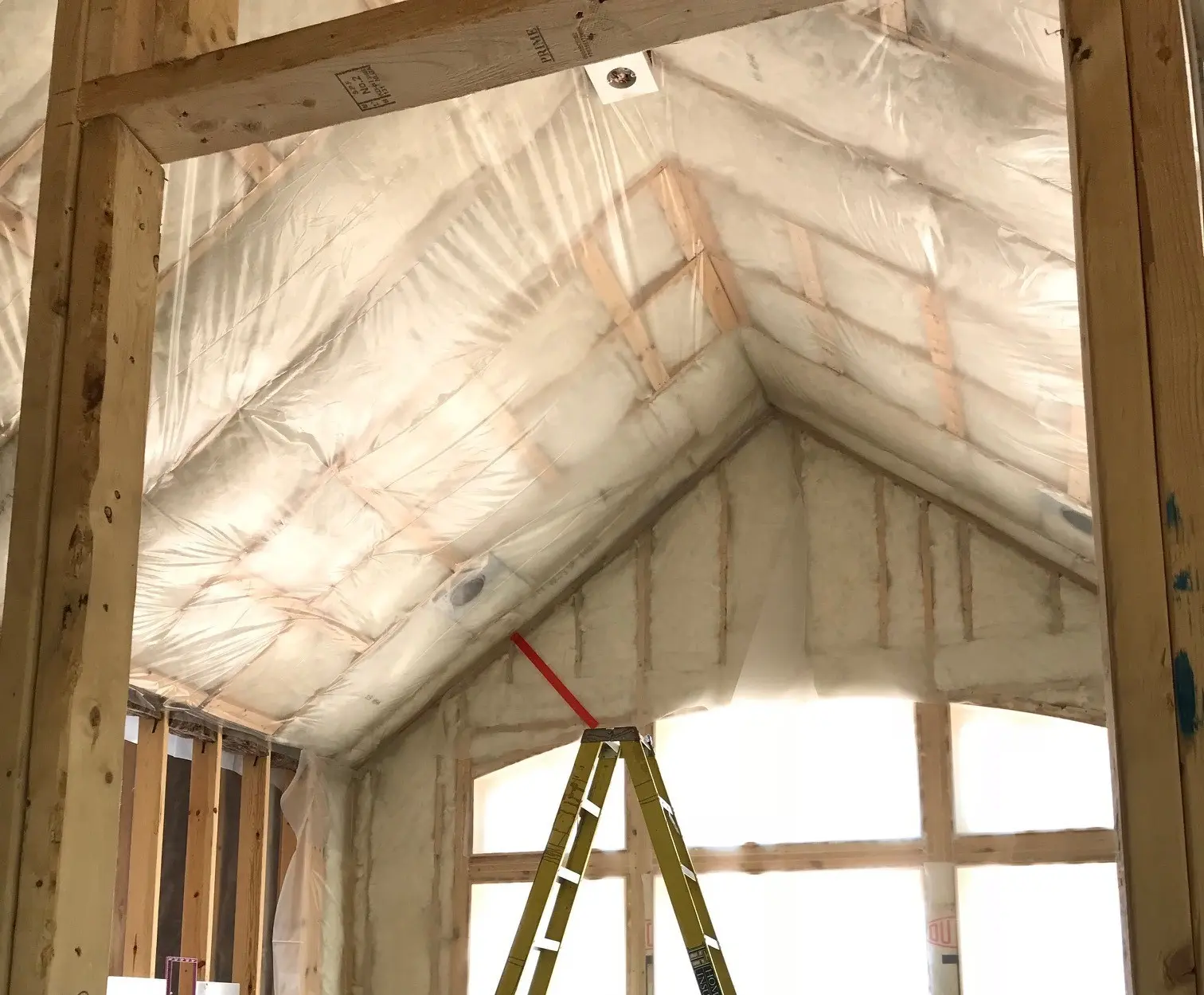
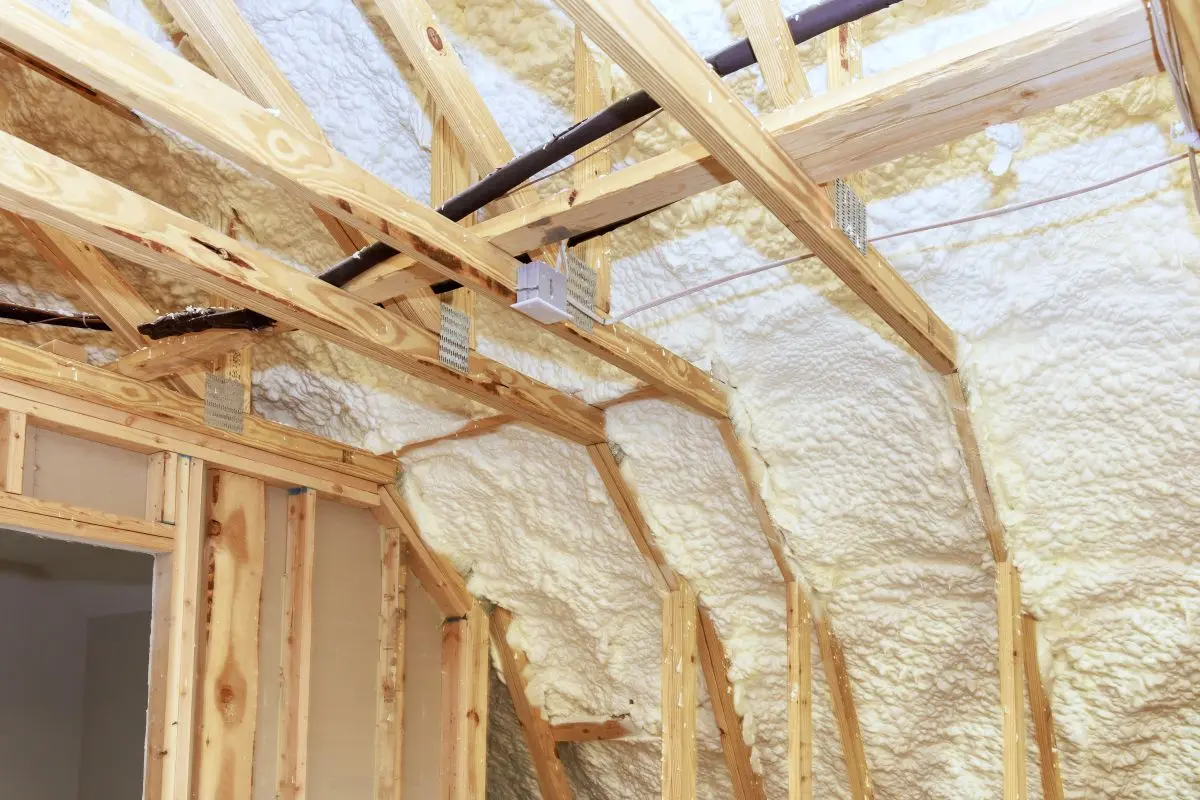
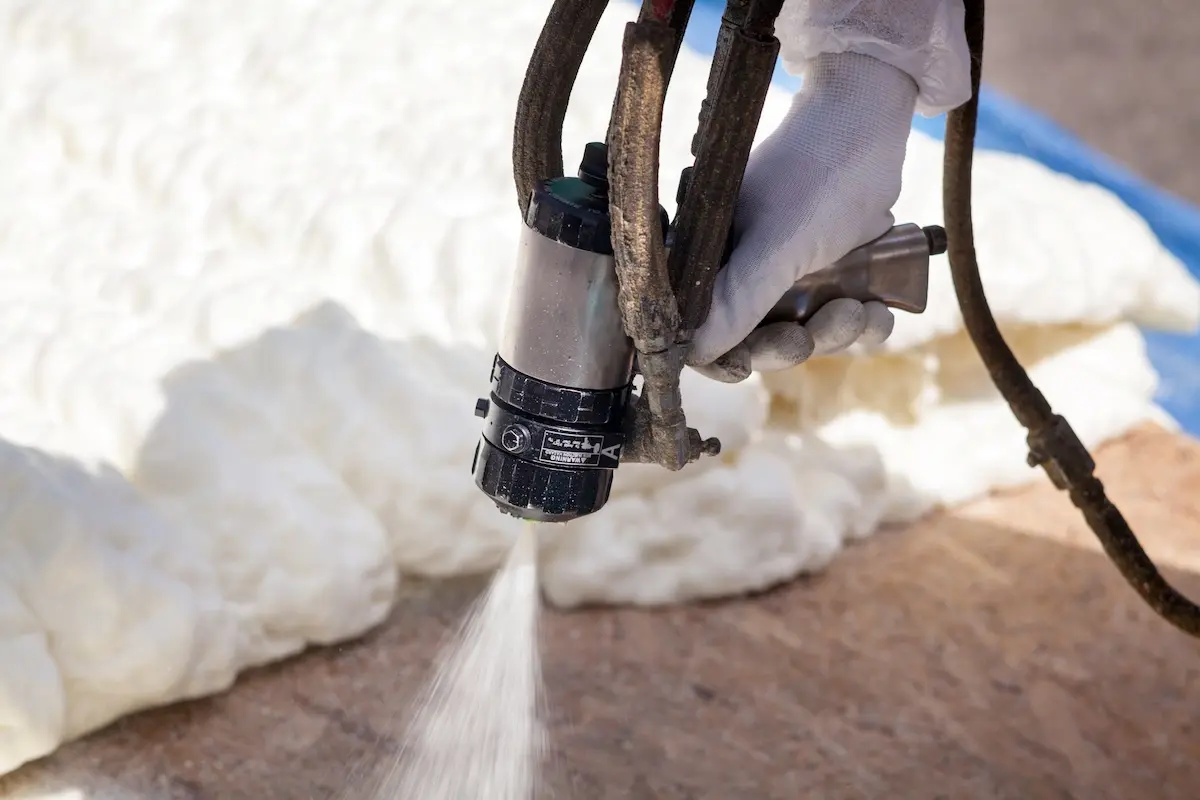
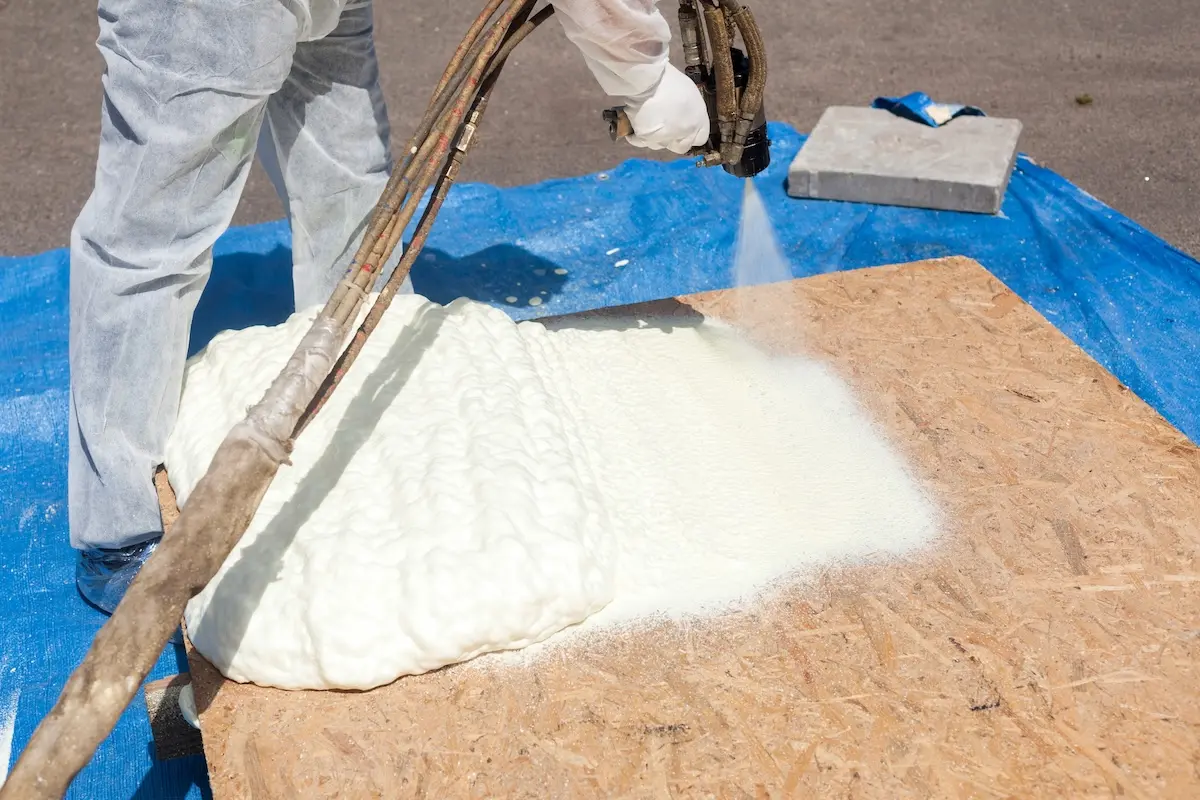
Spray foam starts as two liquid chemicals that combine at the spray gun and expand on contact with the surface. It fills every crack, gap, and irregular space it touches, then hardens into a solid layer that acts as both insulation and an air barrier. No other insulation type does both jobs at once. It comes in two forms: open-cell, which is softer and expands more, and closed-cell, which is dense, rigid, and has a higher R-value per inch. Open-cell reaches R-3.5 to R-4 per inch, while closed-cell reaches R-6 to R-7 per inch, the highest of any commonly used residential insulation material. The choice between the two depends on where it is being installed and what performance you need.
- Open-cell foam: Lighter, more affordable, and great for interior walls, attics, and anywhere sound control is a bonus goal.
- Closed-cell foam: Denser, moisture-resistant, and the right choice for crawl spaces, rim joists, basements, and exterior applications.
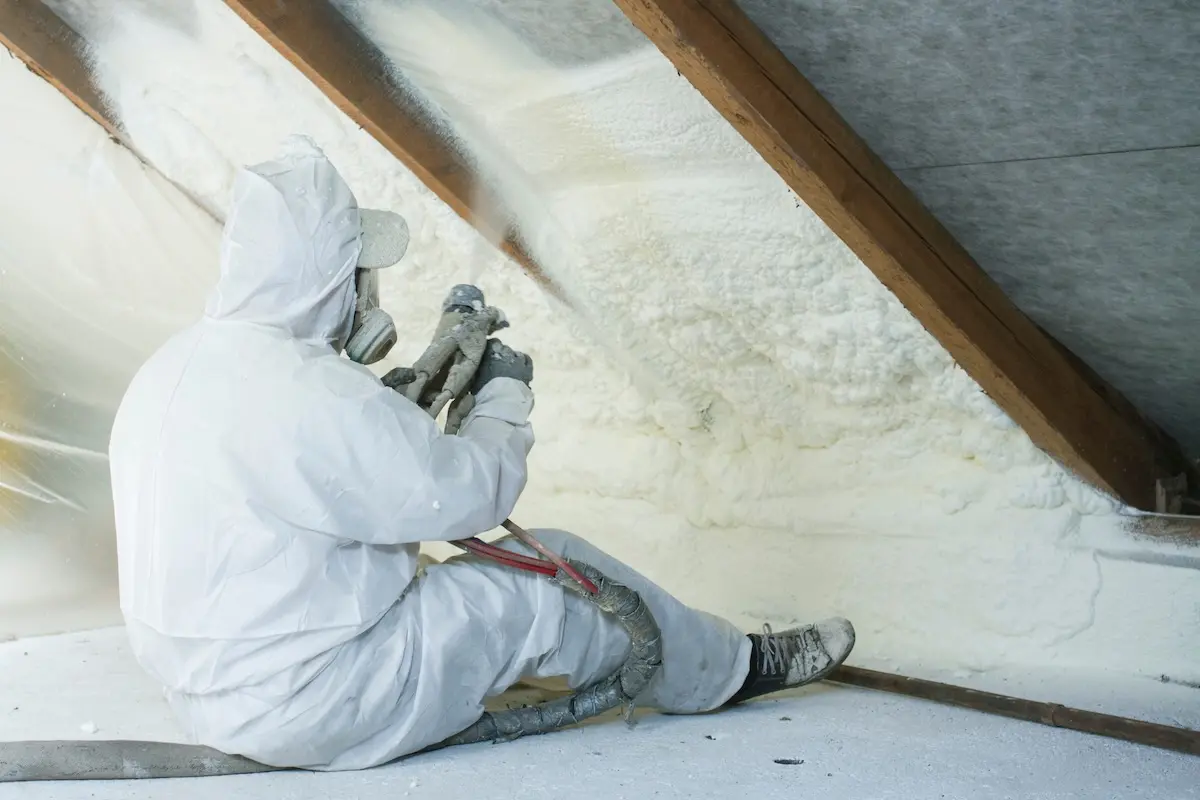
- Application method: A trained installer sprays it directly onto the surface, where it expands and cures within seconds, bonding permanently to wood, concrete, and metal.
- Why it beats batts in tight spaces: Fiberglass batts require a perfectly sized cavity to work well; spray foam conforms to any shape, leaving no voids or gaps behind.
What Is the Difference Between Open-Cell and Closed-Cell Spray Foam?
The two types of spray foam serve different purposes, and picking the wrong one for the application is one of the most common mistakes homeowners make. Knowing the difference upfront saves money and avoids a redo. Open-cell foam has a spongy texture because the cells inside are not fully closed, making it vapor-permeable and more flexible. Closed-cell foam is rigid because the cells are sealed, making it a vapor barrier as well as an air barrier. In a cold climate like Green Bay and surrounding areas, closed-cell is almost always the preferred choice for any below-grade or exterior application because it resists moisture infiltration on top of providing superior thermal resistance. For interior applications where moisture is not a concern, open-cell is a practical, lower-cost option that still delivers excellent air sealing.
- Open-cell best uses: Interior walls, attic rafters (in conditioned attic applications), soundproofing between floors, and areas with no moisture exposure.
- Closed-cell best uses: Crawl spaces, rim joists, basement walls, garage ceilings, and any exterior-facing surface.
- Vapor barrier question: Closed-cell at 2 inches or more acts as a Class II vapor retarder, eliminating the need for a separate poly vapor barrier in most applications.
- Cost difference: Open-cell runs $0.44 to $0.65 per board foot installed; closed-cell runs $1.00 to $2.00 per board foot installed.
8 Benefits of Spray Foam Insulation
These benefits are what separate spray foam from every other insulation option on the market. Some are obvious; others surprise homeowners who expected spray foam to be just another way to add R-value.
1. It Seals Air Leaks at the Same Time It Insulates
Spray foam eliminates two problems in one step, which is something no other insulation material can claim. Air leakage is responsible for a significant share of energy loss in most homes, and standard insulation materials do nothing to stop it. Fiberglass batts, blown-in cellulose, and rigid foam boards all require a separate air sealing step to perform at their rated R-values. Spray foam fills every gap, hole, and crack it contacts as it expands, creating a continuous air barrier that dramatically reduces the amount of conditioned air escaping your home. The U.S. Department of Energy estimates that air leaks account for 30% or more of a home’s heating and cooling costs, making this dual function one of the strongest financial arguments for spray foam.
- Rim joists: One of the leakiest areas in any home, and one of the most cost-effective places to apply closed-cell spray foam.
- Attic penetrations: Pipes, wires, chimneys, and recessed lights are common air leak points that spray foam seals in a single pass.
- Foundation sill plates: Where the wood framing meets the concrete foundation is a persistent cold air entry point that spray foam eliminates permanently.
- Result: Homes with spray foam air sealing consistently test tighter on blower door tests than homes insulated with traditional materials alone.
2. It Delivers the Highest R-Value Per Inch
When space is limited, closed-cell spray foam is the only insulation that can hit high R-value targets in a thin layer. This matters in rim joists, roof assemblies, and walls where there is not much physical depth to work with. Closed-cell spray foam achieves R-6 to R-7 per inch, meaning just 3 inches delivers R-18 to R-21. That same 3 inches of fiberglass batt achieves R-9 to R-11. The difference is significant in any application where adding thickness is not an option. For Green Bay and surrounding areas homes that need to hit R-30 or higher in a tight roof assembly or crawl space wall, closed-cell spray foam is often the only practical path to get there without major structural changes.
- Closed-cell R-value: R-6 to R-7 per inch, the highest available in any common residential insulation material.
- Practical example: 3 inches of closed-cell in a rim joist achieves R-18 to R-21, meeting or exceeding Wisconsin’s energy code requirement for that assembly.
- Open-cell R-value: R-3.5 to R-4 per inch, on par with fiberglass batts but with the added benefit of integrated air sealing.
- Why R-value per inch matters: In any space where depth is constrained, higher R-value per inch means better performance without tearing out walls or rebuilding assemblies.
3. It Reduces Heating and Cooling Bills
This is the benefit most homeowners care about most, and spray foam delivers. Because it handles both insulation and air sealing in one application, the energy savings tend to be larger than what you get from adding batts or blown-in alone. According to the EPA’s ENERGY STAR program, homeowners who add insulation and seal air leaks can save up to 20% on monthly energy bills, and spray foam does both simultaneously. In colder climates like Wisconsin, where heating costs dominate the annual energy budget, that 20% represents real money. Homes in Green Bay and surrounding areas that have undergone spray foam upgrades in attics and crawl spaces regularly report noticeable reductions on their gas and electric bills within the first heating season.
- Typical energy savings: 20% to 40% reduction in heating and cooling bills depending on how under-sealed the home was before installation.
- Where savings come from: Reduced air infiltration, tighter building envelope, and lower HVAC runtime all contribute to a lower monthly bill.
- Payback timeline: Most homeowners recoup their spray foam investment within 5 to 7 years through energy savings alone.
- HVAC sizing benefit: A tighter, better-insulated home often allows for a smaller replacement HVAC system at the end of its life, adding a second layer of long-term savings.
4. It Controls Moisture and Reduces Mold Risk
Closed-cell spray foam is a vapor retarder, which means it slows moisture movement through walls and floors. In a Wisconsin home, where the temperature difference between inside and outside can exceed 70 degrees in January, controlling where moisture condenses inside the wall assembly is critical. When warm interior air hits a cold surface inside the wall, it condenses and creates the conditions for mold and wood rot. Closed-cell spray foam applied to the cold side of an assembly keeps that surface warm enough to prevent condensation. This is one of the primary reasons building scientists recommend spray foam for crawl spaces and rim joists in cold climates. Controlling moisture does not just protect the structure; it also improves indoor air quality by preventing the mold growth that degrades air over time.
- Closed-cell as vapor retarder: At 2 inches or more, closed-cell foam meets the definition of a Class II vapor retarder per building code.
- Crawl space application: Spray foam on crawl space walls and rim joists keeps wood framing dry, dramatically reducing the risk of rot and mold in one of the most vulnerable areas of any home.
- Condensation prevention: By keeping wall and floor surfaces warmer, closed-cell foam moves the dew point outside the assembly rather than inside it.
- Indoor air quality: Fewer mold spores and less moisture intrusion means cleaner air circulating through your living spaces year-round.
5. It Strengthens the Structure It Is Applied To
This benefit is unique to closed-cell spray foam and often surprises homeowners. Because closed-cell foam cures into a rigid, dense material, it adds meaningful structural strength to the wall, roof, or floor assembly it bonds to. Studies conducted by the Spray Polyurethane Foam Alliance have shown that closed-cell spray foam applied to roof decking can increase the roof’s resistance to wind uplift, which matters in areas that see severe weather. For older homes in Green Bay and surrounding areas with aging framing or thin wall assemblies, this structural reinforcement is a secondary benefit that fiberglass and cellulose simply cannot provide. The foam bonds permanently to wood and concrete, bracing the assembly rather than just filling it.
- Racking strength: Closed-cell spray foam increases wall panel stiffness, which improves a structure’s resistance to racking forces from wind loads.
- Roof deck adhesion: Foam bonded to the underside of roof sheathing adds uplift resistance, which can matter during high-wind events.
- No settling or sagging: Unlike blown-in cellulose or fiberglass batts, spray foam does not shift, settle, or compress over time, maintaining its structural and thermal contribution indefinitely.
- Aging home benefit: Spray foam can reinforce and stabilize older framing members that have minor movement or gaps without requiring replacement.
6. It Reduces Outside Noise
Open-cell spray foam in particular is an excellent sound absorber. Its soft, spongy cell structure breaks up airborne sound waves rather than reflecting them, which makes it a popular choice for home offices, bedrooms near busy roads, and walls between attached garages and living spaces. Homeowners in Green Bay and surrounding areas who have had open-cell spray foam installed in exterior walls or between floors consistently report a noticeable reduction in outside traffic noise, HVAC noise, and sound transmission between rooms. While spray foam is not the same as purpose-built acoustic panels, it provides meaningful sound attenuation as a natural side effect of the insulation install with no added cost or material.
- Open-cell sound performance: Open-cell foam achieves STC (sound transmission class) ratings of 37 to 39 in a standard 2×4 wall assembly, compared to 32 to 36 for fiberglass batts.
- Best sound applications: Exterior walls, floors above living spaces, home offices, master bedrooms, and walls adjacent to garages or utility rooms.
- Closed-cell and sound: Closed-cell foam also reduces sound transmission but is denser and less effective as an absorber than open-cell; its primary advantage remains thermal and moisture performance.
- Combination approach: Some installers use open-cell in walls for sound and closed-cell in the crawl space and rim joists for moisture control, getting the right material in the right place.
7. It Does Not Settle or Degrade Over Time
One of the quiet advantages of spray foam is that it stays where it is installed. Blown-in cellulose settles over time, losing effective depth. Fiberglass batts can compress, sag, or absorb moisture and lose R-value. Spray foam cures into a permanent solid that does not shift, settle, compress, or absorb water. The performance you get on installation day is the performance you get 20 years later. This is especially valuable in attic floors and crawl spaces, where other insulation materials are prone to movement from air currents, pests, or moisture. For homeowners who want a one-time upgrade that does not require checking or adding to every decade, spray foam delivers a lifespan measured in the life of the building, not the insulation material.
- No settling: Unlike loose-fill products, spray foam maintains its full thickness and R-value from day one through the life of the structure.
- Pest resistance: Spray foam does not provide a food source or nesting material for rodents, which is a common problem with cellulose and fiberglass in attics and crawl spaces.
- Long lifespan: Properly installed spray foam is expected to last 80 to 100 years, making it a true install-once solution for most homeowners.
- Maintenance-free: After installation, spray foam requires no topping off, no re-leveling, and no inspection for compression or moisture damage.
8. It Can Improve Your Home’s Resale Value
A tighter, better-insulated home commands more attention on the market, and buyers in 2026 are increasingly aware of energy efficiency as a purchase factor. Spray foam upgrades in attics, crawl spaces, and rim joists are tangible, documented improvements that a home inspector will note and a buyer will value. Energy-efficient homes tend to sell faster and at higher prices than comparable homes with older, under-performing envelopes. While spray foam is not the only factor in resale value, it contributes to the overall energy profile of the home in a way that is visible on utility bills and testable during a home inspection. For homeowners in Green Bay and surrounding areas who are planning to sell within the next five to ten years, spray foam is an upgrade that pays in two ways: lower bills while you live there, and a stronger selling position when you leave.
- Energy audits and inspections: A blower door test result showing a tight building envelope is a documented asset that buyers and their agents notice.
- Utility bill history: Low average monthly energy costs are a powerful selling point, especially for buyers comparing homes of similar size and age.
- Buyer awareness: More buyers in 2026 are asking about insulation type and energy performance as part of the purchase decision, particularly in climate-demanding regions like Wisconsin.
- Combined with other upgrades: Spray foam paired with a newer HVAC system and good windows creates a cohesive energy efficiency story that supports a higher asking price.
What Does Spray Foam Insulation Cost in 2026?
Spray foam costs more upfront than other insulation types, and that is simply true. But understanding what drives the cost helps homeowners evaluate whether the investment makes sense for their specific situation.
How Much Does Open-Cell Spray Foam Cost?
Open-cell spray foam is the more affordable of the two types and works well for most interior applications where moisture is not a concern. It is a popular choice for attic rafter bays in conditioned attic conversions, interior walls where sound control is a goal, and floors above unconditioned spaces. The material expands significantly on application, filling large volumes quickly, which helps keep labor time reasonable on open-cavity jobs.
- Cost per board foot installed: $0.44 to $0.65 per board foot, where one board foot equals one square foot at one inch of thickness.
- Whole attic (1,000 to 1,500 sq ft): Expect $1,800 to $3,500 for a conditioned attic application at 5 to 6 inches thick.
- Interior walls (per 500 sq ft of wall area): Roughly $800 to $1,500 depending on cavity depth and accessibility.
- Labor share of cost: Labor typically represents 40 to 50% of the total installed price for open-cell foam, so contractor pricing varies meaningfully between bids.
How Much Does Closed-Cell Spray Foam Cost?
Closed-cell spray foam costs more per board foot than open-cell because the material itself is more chemically complex and requires a higher density application to perform as a vapor retarder. That said, fewer inches are needed to hit the same R-value target, which offsets some of the material cost difference in thin-application situations like rim joists and crawl space walls.
- Cost per board foot installed: $1.00 to $2.00 per board foot, roughly two to three times the cost of open-cell.
- Rim joist application (typical home): $500 to $1,500 for a full rim joist treatment at 2 to 3 inches thick, one of the best return-on-investment applications available.
- Crawl space walls and floor (1,000 sq ft crawl): $2,500 to $6,000 depending on wall height, accessibility, and whether prep work is needed.
- Whole-home closed-cell upgrade: Full applications covering attic, crawl space, and rim joists on a 1,500 to 2,000 square foot home typically run $8,000 to $18,000.
Is There a Tax Credit for Spray Foam Insulation in 2026?
Federal incentives are still available for qualifying insulation upgrades, which can meaningfully reduce the net cost of a spray foam install. The Inflation Reduction Act extended the Energy Efficient Home Improvement Credit through 2032, covering insulation materials at 30% of cost up to $1,200 per year. This credit applies to insulation materials, not labor, so keep your material cost receipts separate from your contractor invoice. In Green Bay and surrounding areas, some Wisconsin utilities also offer rebates for air sealing and insulation upgrades, so it is worth calling your energy provider before scheduling work to find out what is currently available in your service area.
- Federal tax credit: 30% of qualified insulation material costs, up to $1,200 annually, available through 2032.
- Wisconsin utility rebates: Focus on Energy, Wisconsin’s statewide efficiency program, offers rebates for qualifying insulation upgrades; check for current amounts.
- Combined savings potential: A homeowner spending $5,000 on insulation materials could receive a $1,200 federal credit plus utility rebates, bringing effective net cost down significantly.
- Important note: Consult a tax professional to confirm eligibility for your specific situation before relying on credit estimates in your budget.
Frequently Asked Questions About Spray Foam Insulation
How long does spray foam insulation last?
Properly installed spray foam lasts the lifetime of the structure. Both open-cell and closed-cell foam are expected to maintain their performance for 80 to 100 years without settling, compressing, or degrading. It is a true install-once solution for most applications.
Can spray foam be installed in an existing home?
Yes. Spray foam is regularly installed in existing homes in attics, crawl spaces, rim joists, and basement walls without major demolition. It is harder to retrofit into closed wall cavities without opening the walls, so it is most practical in accessible areas or during a remodel.
Does spray foam smell after installation?
There is an odor during and immediately after installation while the foam cures. Curing typically takes 24 hours, and most installers recommend staying out of the treated area for that period. Once fully cured, properly installed spray foam is odorless.
Is spray foam worth it compared to fiberglass batts?
For attics, crawl spaces, and rim joists, spray foam typically outperforms fiberglass because it handles air sealing and insulation simultaneously. For open wall cavities in new construction where moisture is not a concern, fiberglass batts are a cost-effective alternative. The right answer depends on the application and your priorities.
Can I install spray foam myself?
DIY spray foam kits are available for small gap filling, but whole-home applications require professional equipment and training. Improperly mixed or applied spray foam can fail to cure correctly, shrink away from framing, or emit harmful chemicals. Professional installation is strongly recommended for any significant area of coverage.
How do I find a reputable spray foam contractor?
Ask for proof of insurance, references from recent local jobs, and a written scope of work specifying foam type, thickness, and R-value. Reputable contractors will also discuss ventilation requirements and building code compliance for your specific application before starting work.
Ready to Upgrade? Talk to Hometown Insulation
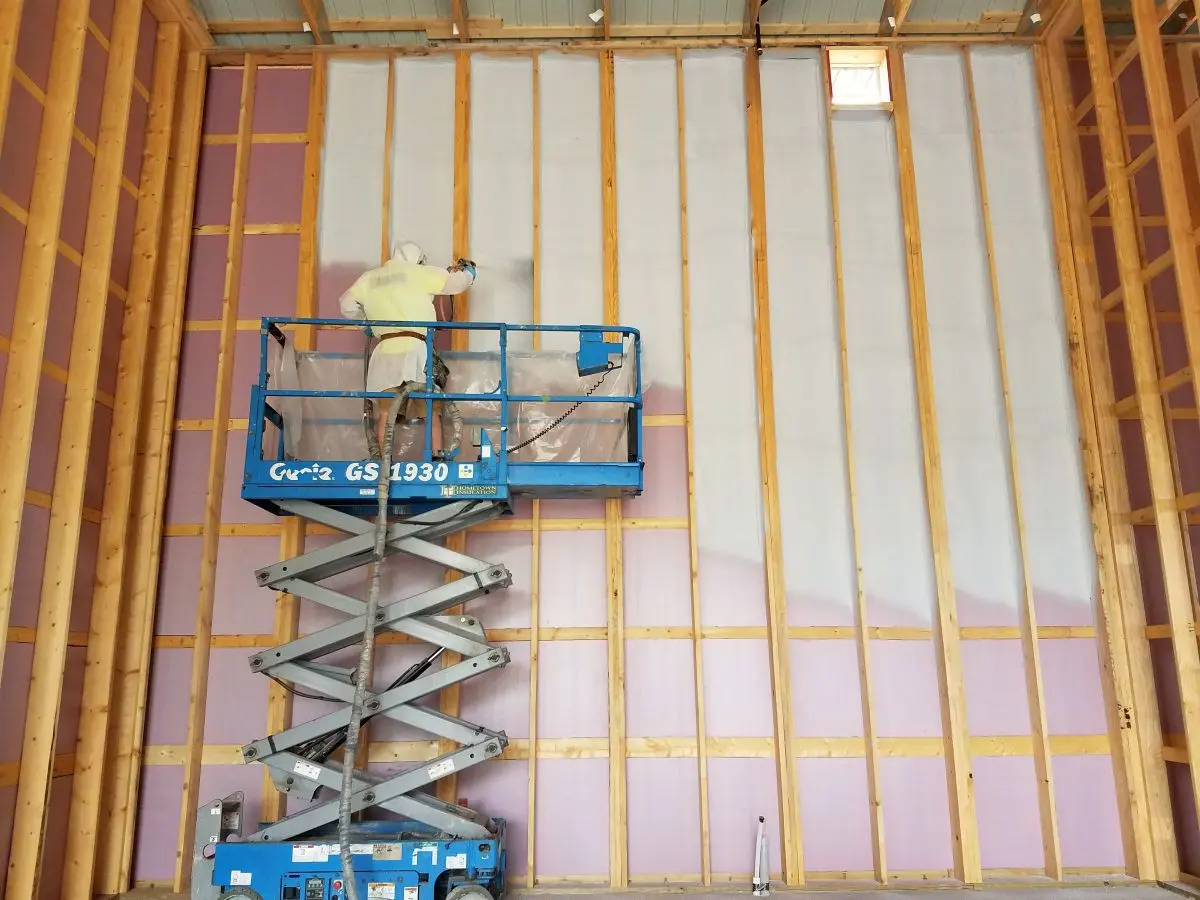
Spray foam insulation is one of the most effective upgrades available to Wisconsin homeowners, and the benefits go well beyond just adding R-value. From stopping drafts and controlling moisture to reducing noise and strengthening your home’s structure, it addresses multiple problems in one installation. At Hometown Insulation, we help homeowners in Green Bay and surrounding areas figure out exactly where spray foam makes the most sense, what type is right for each application, and what the real costs and savings look like for their specific home. Reach out today to schedule a consultation and find out whether spray foam is the right call for your house in 2026.